> For the complete documentation index, see [llms.txt](https://kb.logicerp.com/llms.txt). Markdown versions of documentation pages are available by appending `.md` to page URLs; this page is available as [Markdown](https://kb.logicerp.com/logic-erp-learning-hub-tutorials-and-best-practices/setups/party-wise-settings/party-+-company-wise-defaults.md).
# Party + Company Wise Defaults
**YouTube:** [How to Set Party + Company/Brand-wise TD, CD, Tax, etc. for Sale?](https://www.youtube.com/watch?v=74P5abe_tx4)
## How to Set Party + Company/Brand-wise TD, CD, Tax, etc. for Sale?
In this tutorial, we will learn **how to apply Party + Company (Brand) wise defaults in Logic ERP**. This feature allows you to define discounts, rate adjustments, and price lists that apply **only when a specific party transacts items of a specific brand**, ensuring precise and controlled billing.
***
### **Access To Party + Company Wise Defaults Setup**
* Navigate to the **Setup Module** from the main menu
* Go to the **Party Wise Settings** section
* Open the **Party + Company Wise Defaults** window
***
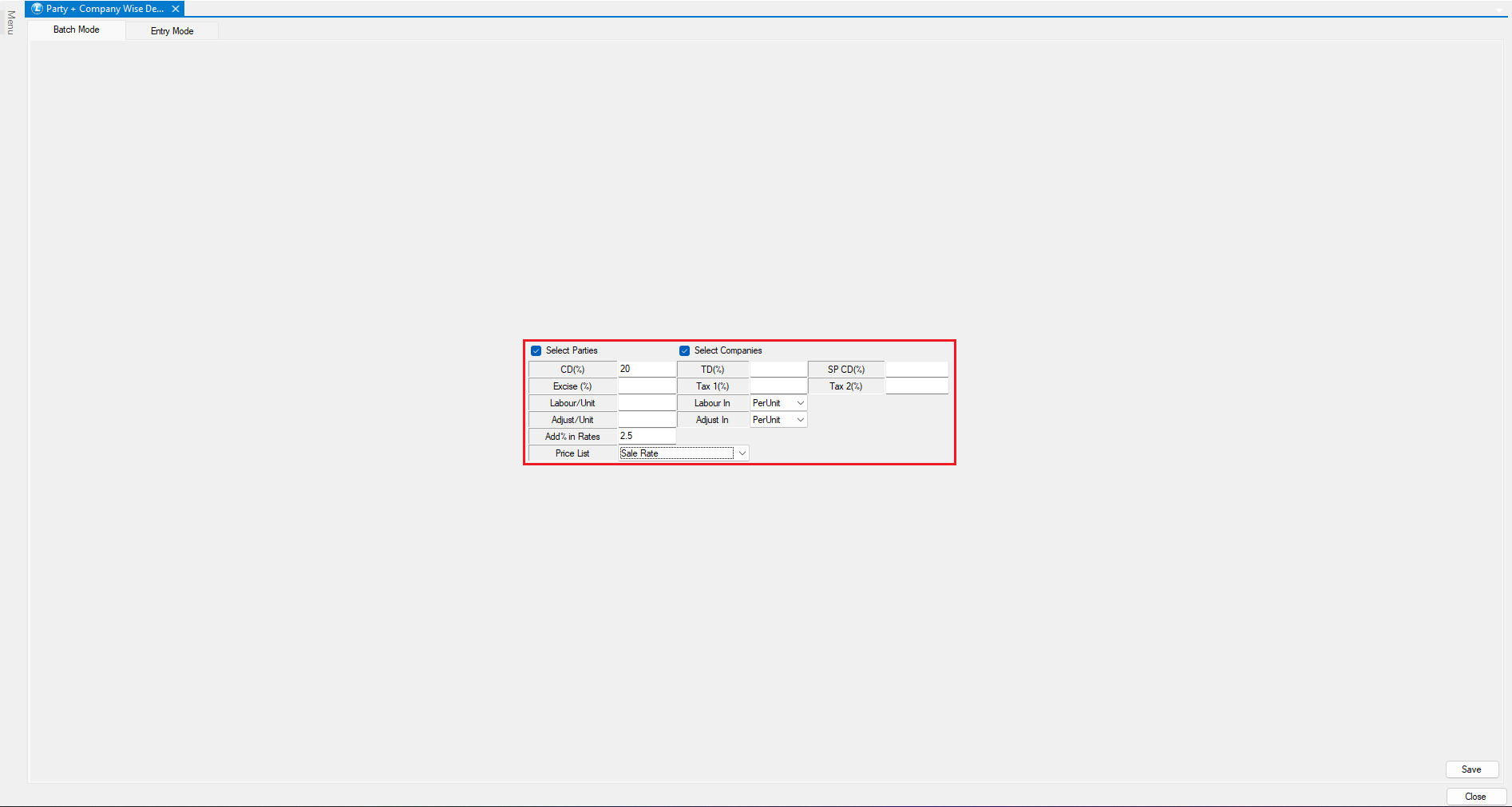
### **Define Defaults in Batch Mode**
* Switch to **Batch Mode**
* Select the **Customer Account**
* Choose the **Brand (Company)** for which defaults need to be applied
**Available Default Options**
You can define multiple defaults, including:
* **CD (Cash Discount)** – percentage based
* **TD (Trade Discount)** – percentage based
* **SPCD** – percentage based
* **Per Unit Based Discounts**
* **Add % on Rate** – the defined percentage will be added to the sales rate
* **Price List** – the bill will be generated based on the selected price list
* Enter the required values as per your business rules
* Click **Save** to apply the settings
***
### **Verify the Effect in Sales Bill**
* Open the **Sales Bill** window
* Initiate a new transaction
* Select the **Customer Account** for whom Party + Company wise defaults were defined
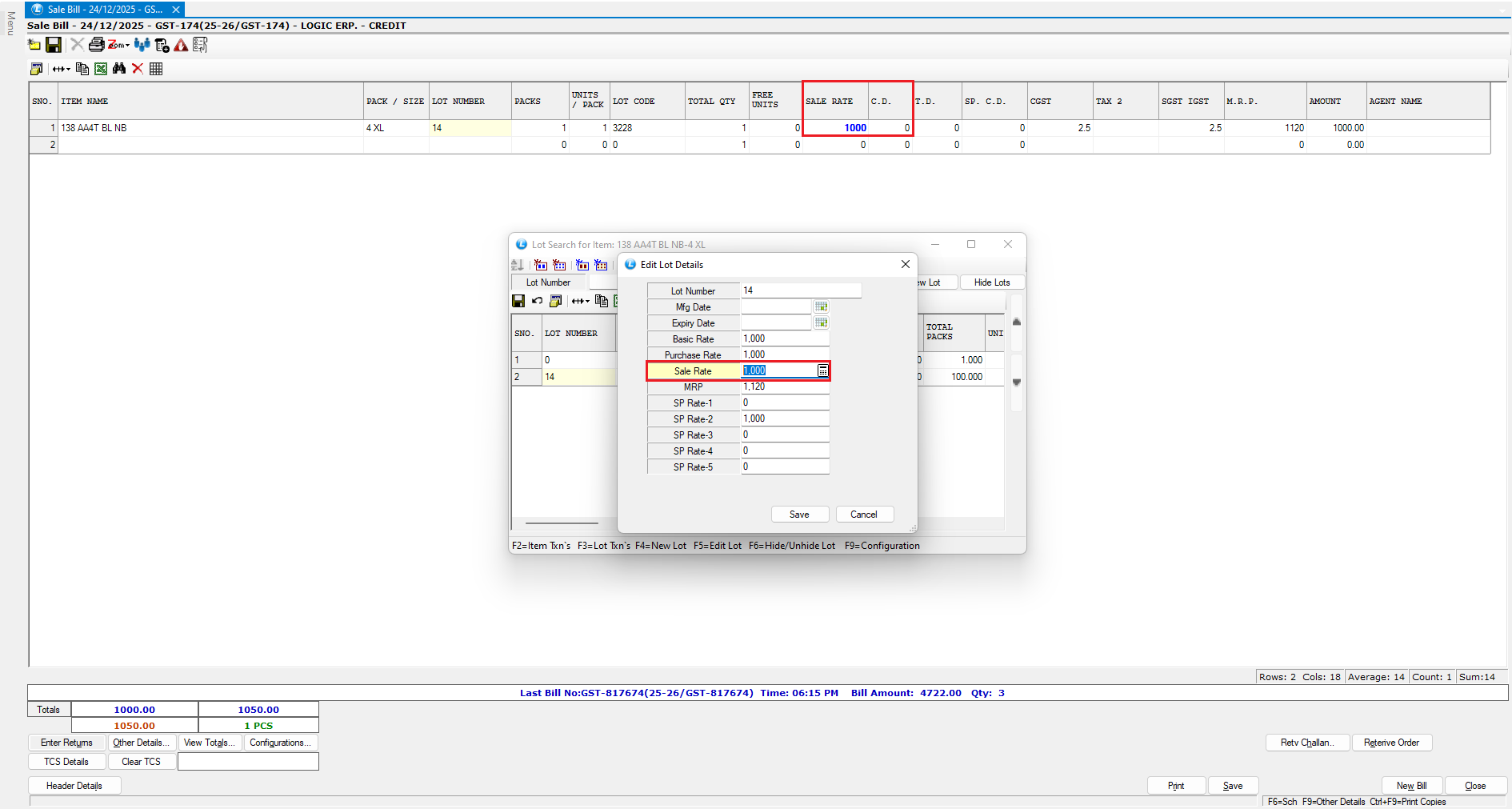
#### **Scenario 1: Transact an Item of a Different Brand**
* Enter an item **not belonging to the selected brand**
* You will notice:
* No discount is applied
* No percentage is added to the sales rate
* Price list remains unchanged
***
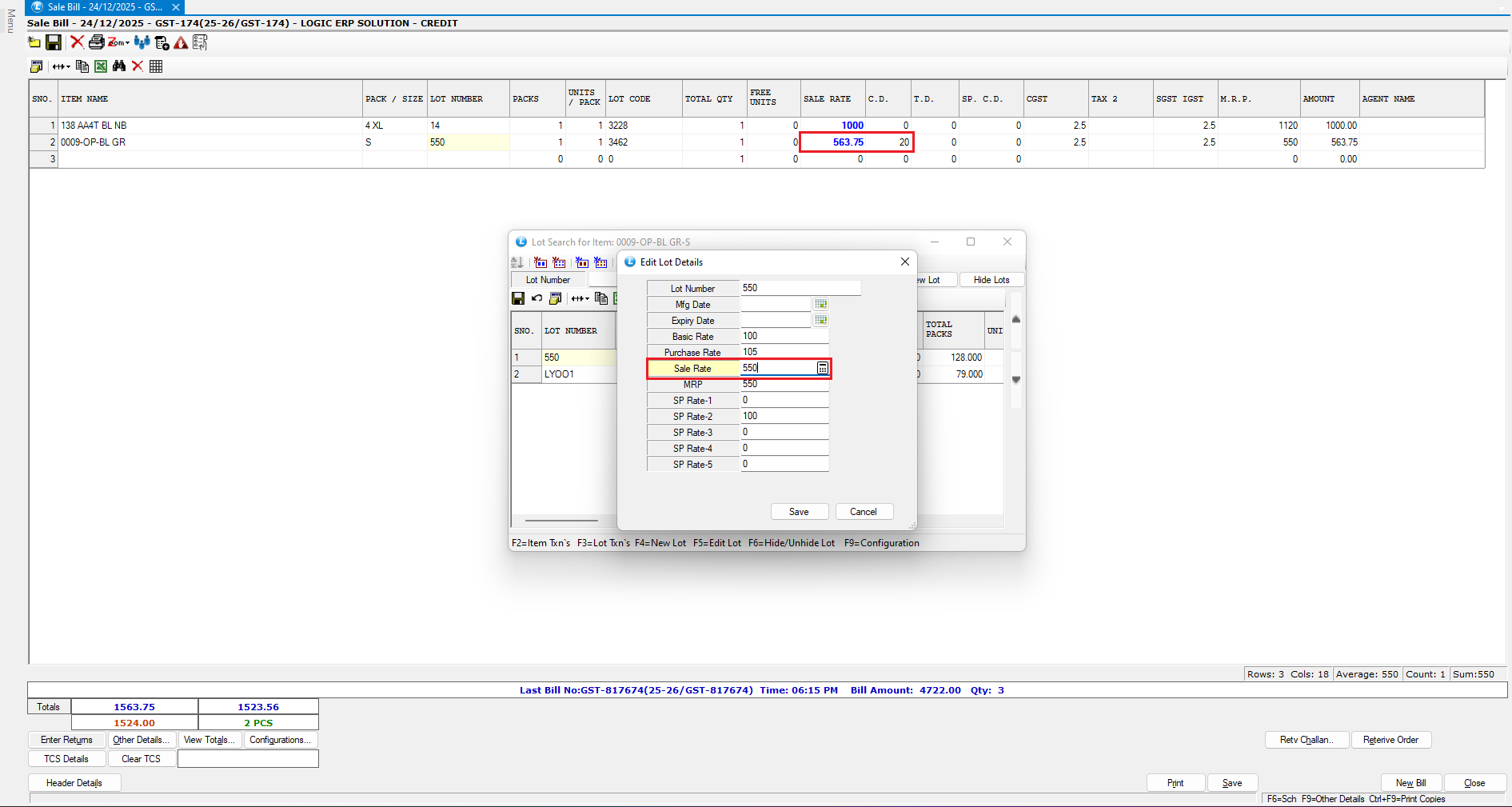
#### **Scenario 2: Transact an Item of the Defined Brand**
* Enter an item **belonging to the selected brand**
* As soon as the item is selected:
* The predefined **percentage discount** is applied automatically
* The **2.5% add-on (as defined)** is added to the sales rate
* The selected **price list** is applied automatically
***
### **Conclusion**
Party + Company Wise Defaults in Logic ERP help you:
* Apply brand-specific pricing rules per customer
* Automate discounts and rate adjustments
* Maintain accurate and controlled billing
* Reduce manual intervention and billing errors
* Ensure consistent pricing policies across transactions
This feature is especially useful for businesses managing **multiple brands with customer-specific pricing agreements**.
---
# Agent Instructions
This documentation is published with GitBook. GitBook is the documentation platform designed so that both humans and AI agents can read, navigate, and reason over technical content effectively. Learn more at gitbook.com.
## Querying This Documentation
If you need additional information that is not directly available in this page, you can query the documentation dynamically by asking a question.
Perform an HTTP GET request on the current page URL with the `ask` query parameter, and the optional `goal` query parameter:
```
GET https://kb.logicerp.com/logic-erp-learning-hub-tutorials-and-best-practices/setups/party-wise-settings/party-+-company-wise-defaults.md?ask=&goal=
```
`ask` is the immediate question: it should be specific, self-contained, and written in natural language.
`goal` is optional and describes the broader end goal you are ultimately trying to accomplish on behalf of the user. GitBook uses it to tailor the answer towards what is most useful for that goal.
The response will contain a direct answer to the question and relevant excerpts and sources from the documentation.
Use this mechanism when the answer is not explicitly present in the current page, you need clarification or additional context, or you want to retrieve related documentation sections.