> For the complete documentation index, see [llms.txt](https://kb.logicerp.com/llms.txt). Markdown versions of documentation pages are available by appending `.md` to page URLs; this page is available as [Markdown](https://kb.logicerp.com/logic-erp-learning-hub-tutorials-and-best-practices/user-access/logic-global-admin/sale-return/do-not-link-sale-return-with-sale-through-sale-history.md).
# Do not Link Sale Return with Sale through Sale History
**YouTube:** [How to Disable Sale Return Linking via Sale History?](https://www.youtube.com/watch?v=zaYpmLp4fn4)
## How to Disable Sale Return Linking via Sale History?
In this tutorial, we will explore a setting in **Logic ERP** that **prevents the automatic linking of sale returns with the original sale bills** through the **Sale History** window. This is useful when you want to manage returns independently of the original transactions.
***
### **Enable the Feature in Global Settings**
* Open **Logic Admin** and go to **Global Settings**.
* Navigate to the **Sale Return Settings** section.
* Locate and enable the option: **“Do not Link Sale Return with Sale through Sale History”.**
Let's proceed with this option turned on to understand its practical implications in Voucher entry.
* Click **Save** to apply the setting.
* **Restart the Logic ERP software** for the changes to take effect.
***
### **Process a Sale and Return Entry**
* First, create and **save a sale bill** with item details.
* Now, go to the **Sale Return** module to return an item from that bill.
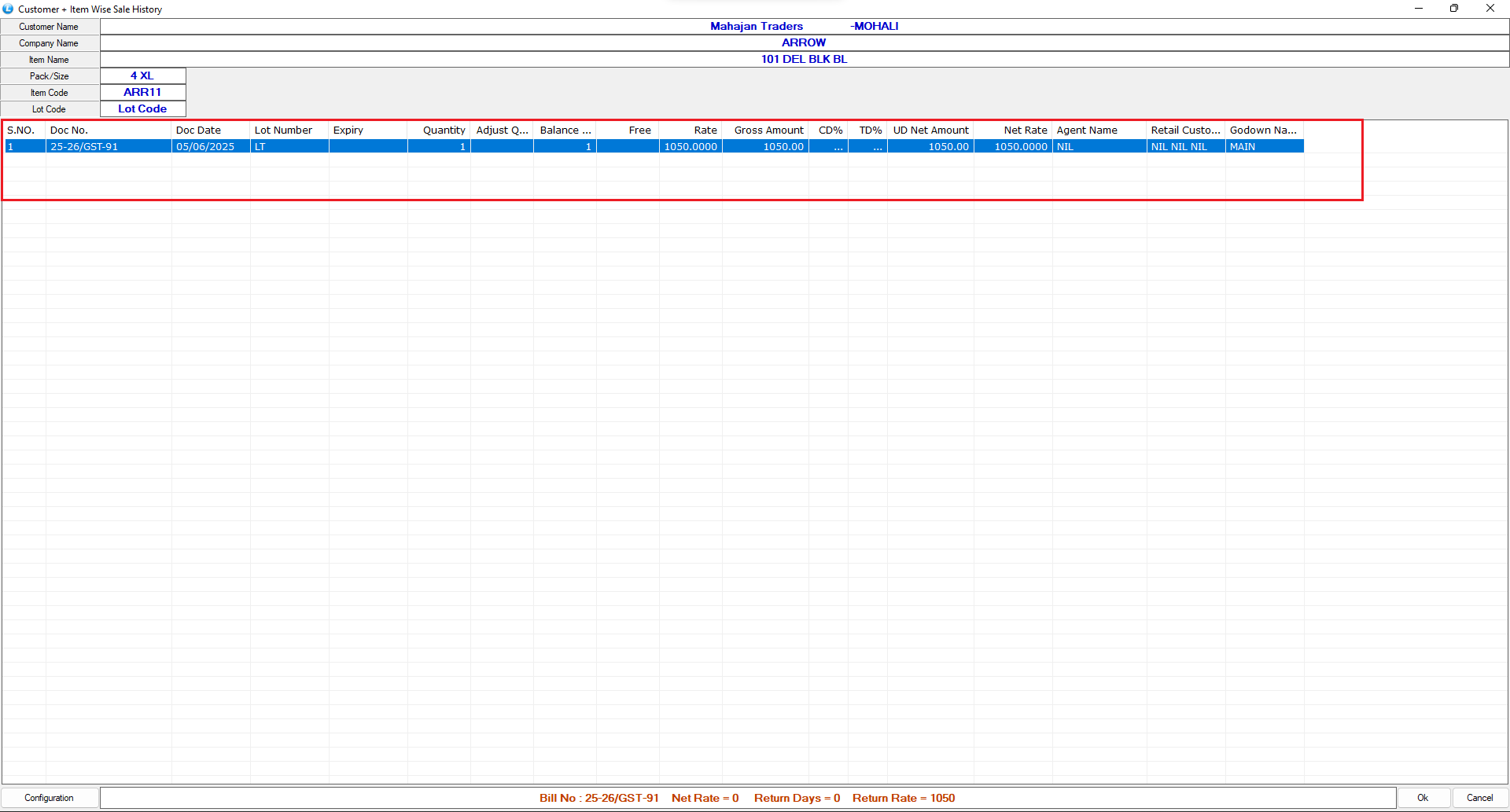
* When selecting the **lot number**, the **Sale History window** will appear.
* Select the original sale bill (for demonstration) and **save the return entry**.
> With the setting enabled, the system will **not link** this sale return to the selected sale bill—even though it was chosen during the return process.
***
### **Verify the Restriction**
* Begin another **sale return entry**.
* When the **Sale History** window appears.
* You'll see that the **previous sale bill** still appears as **unadjusted**.
* This confirms that **no link** was established with the sale return.
***
### **Conclusion**
The **“Do not Link Sale Return with Sale through Sale History”** setting in Logic ERP is ideal for businesses that want greater control over return processing, keeping them independent from original invoices. It ensures flexibility in return management while maintaining clear transaction records.
---
# Agent Instructions
This documentation is published with GitBook. GitBook is the documentation platform designed so that both humans and AI agents can read, navigate, and reason over technical content effectively. Learn more at gitbook.com.
## Querying This Documentation
If you need additional information that is not directly available in this page, you can query the documentation dynamically by asking a question.
Perform an HTTP GET request on the current page URL with the `ask` query parameter, and the optional `goal` query parameter:
```
GET https://kb.logicerp.com/logic-erp-learning-hub-tutorials-and-best-practices/user-access/logic-global-admin/sale-return/do-not-link-sale-return-with-sale-through-sale-history.md?ask=&goal=
```
`ask` is the immediate question: it should be specific, self-contained, and written in natural language.
`goal` is optional and describes the broader end goal you are ultimately trying to accomplish on behalf of the user. GitBook uses it to tailor the answer towards what is most useful for that goal.
The response will contain a direct answer to the question and relevant excerpts and sources from the documentation.
Use this mechanism when the answer is not explicitly present in the current page, you need clarification or additional context, or you want to retrieve related documentation sections.