> For the complete documentation index, see [llms.txt](https://kb.logicerp.com/llms.txt). Markdown versions of documentation pages are available by appending `.md` to page URLs; this page is available as [Markdown](https://kb.logicerp.com/logic-erp-learning-hub-tutorials-and-best-practices/user-access/setup-widget-templates.md).
# Setup Widget Templates
**YouTube:** [How to Configure Widget Templates for Quick Reference in Data Entry Screens?](https://www.youtube.com/watch?v=1y1avEI8pyo)
## How to Configure Widget Templates for Quick Reference in Data Entry Screens?
In this tutorial, we’ll learn how to **create Widget Templates, allocate them to users, and configure widgets** to enhance the billing experience in **Logic ERP**.
***
### **Create a Widget Template**
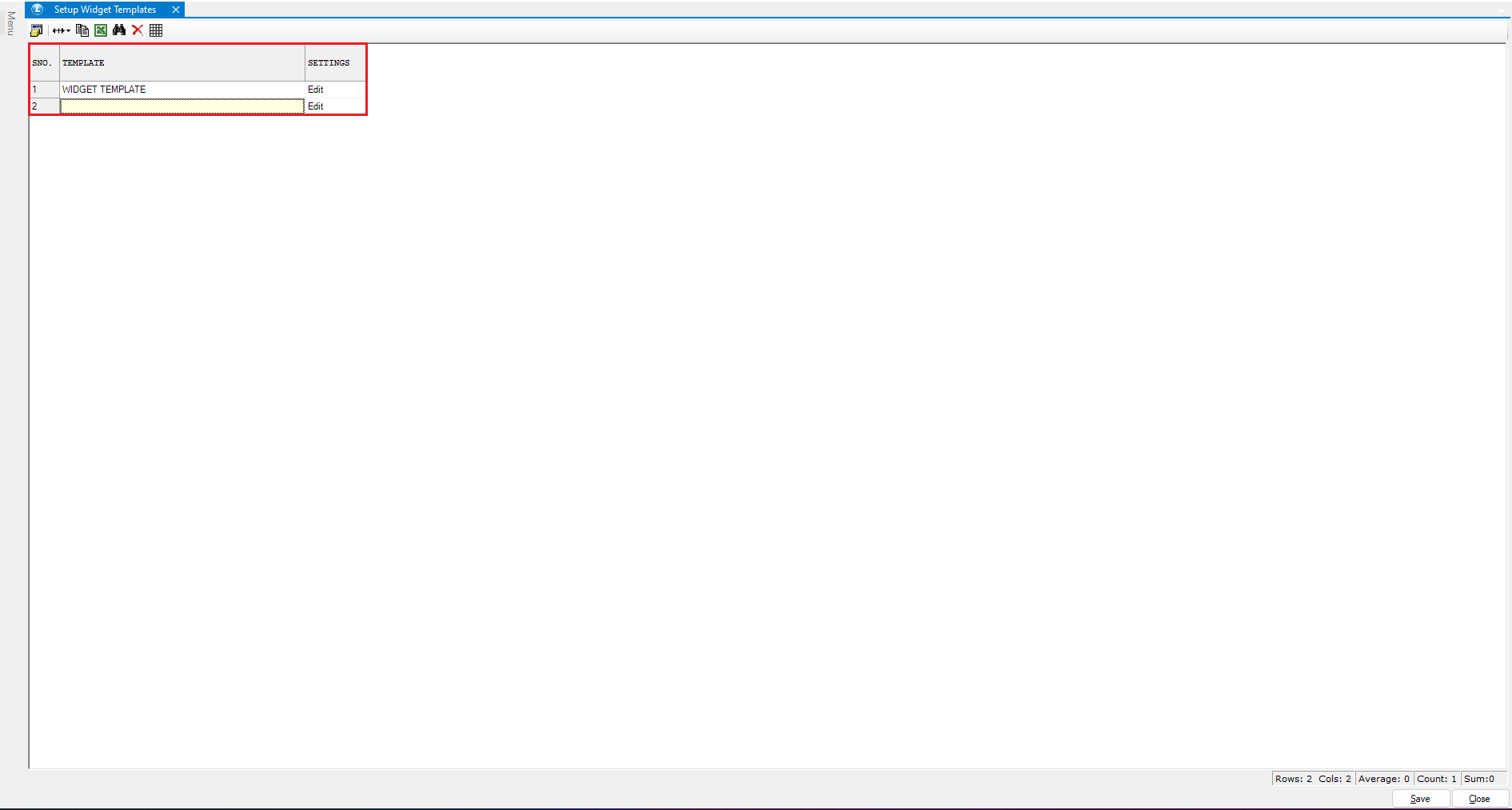
* Navigate to **Setup Widget Templates**.
* Enter the **Template Name** in the Template column.
* Click **Save** to create the template.
***
### **Allocate Widget Template to Users**
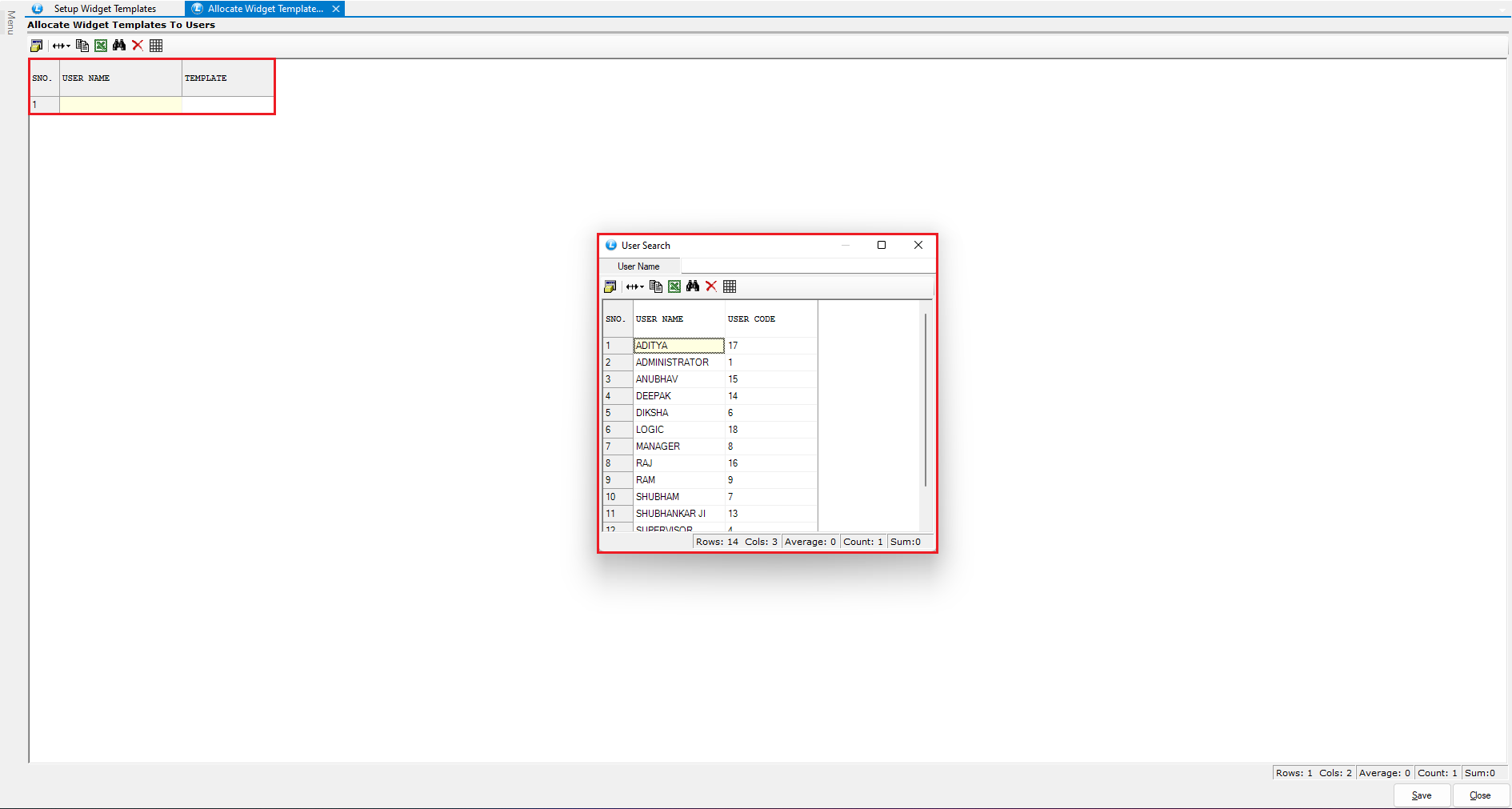
* Open **Allocate Widget Template to Users** module.
* In the **Username** column, press the **Space Bar** to open the user list.
* Select the user to whom the widget template should be assigned.
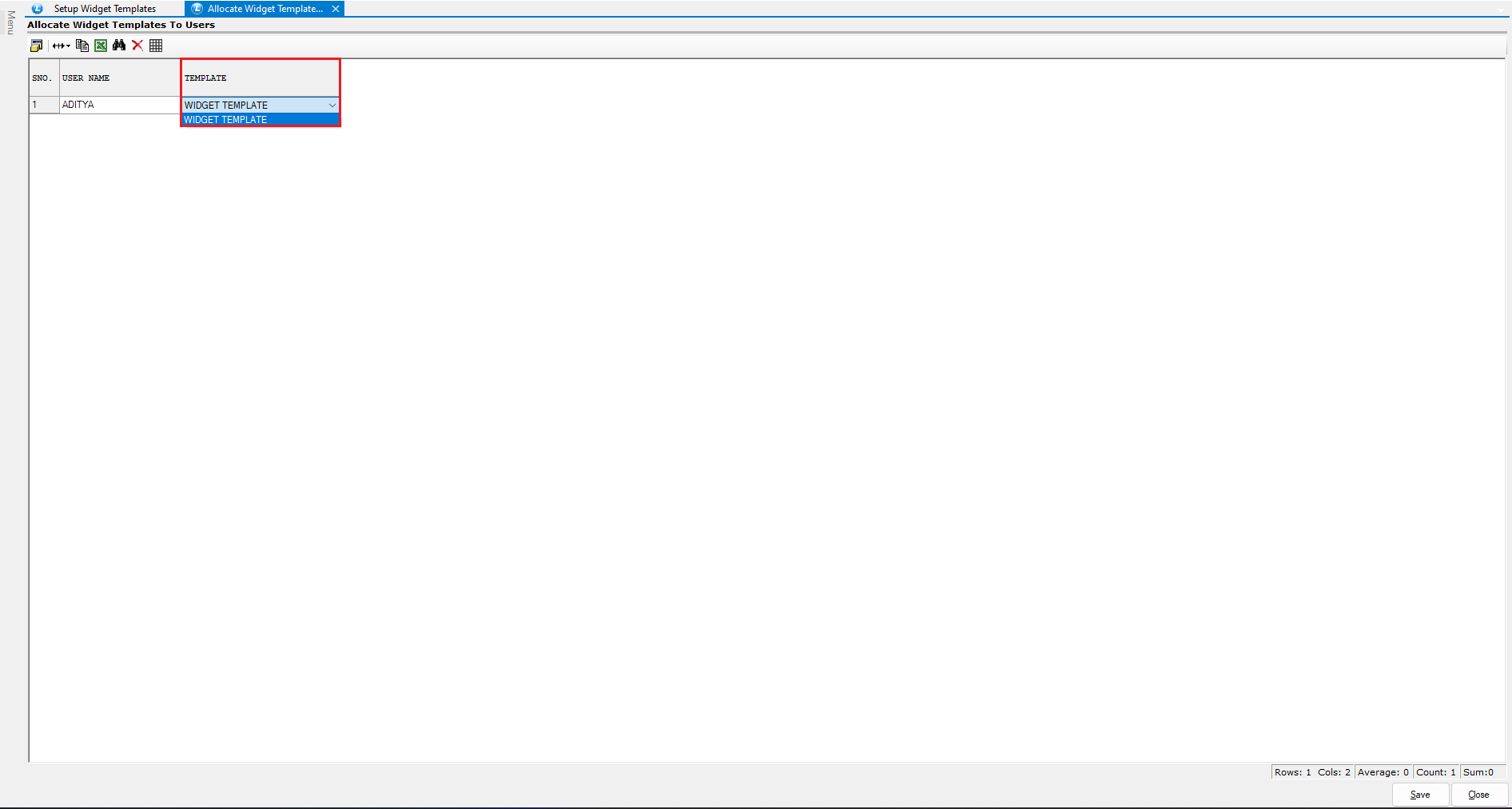
* Move to the **Template** column, press the **Space Bar**, and select the required template.
* Click **Save** to confirm the allocation.
***
### **Configure Widget Template Settings**
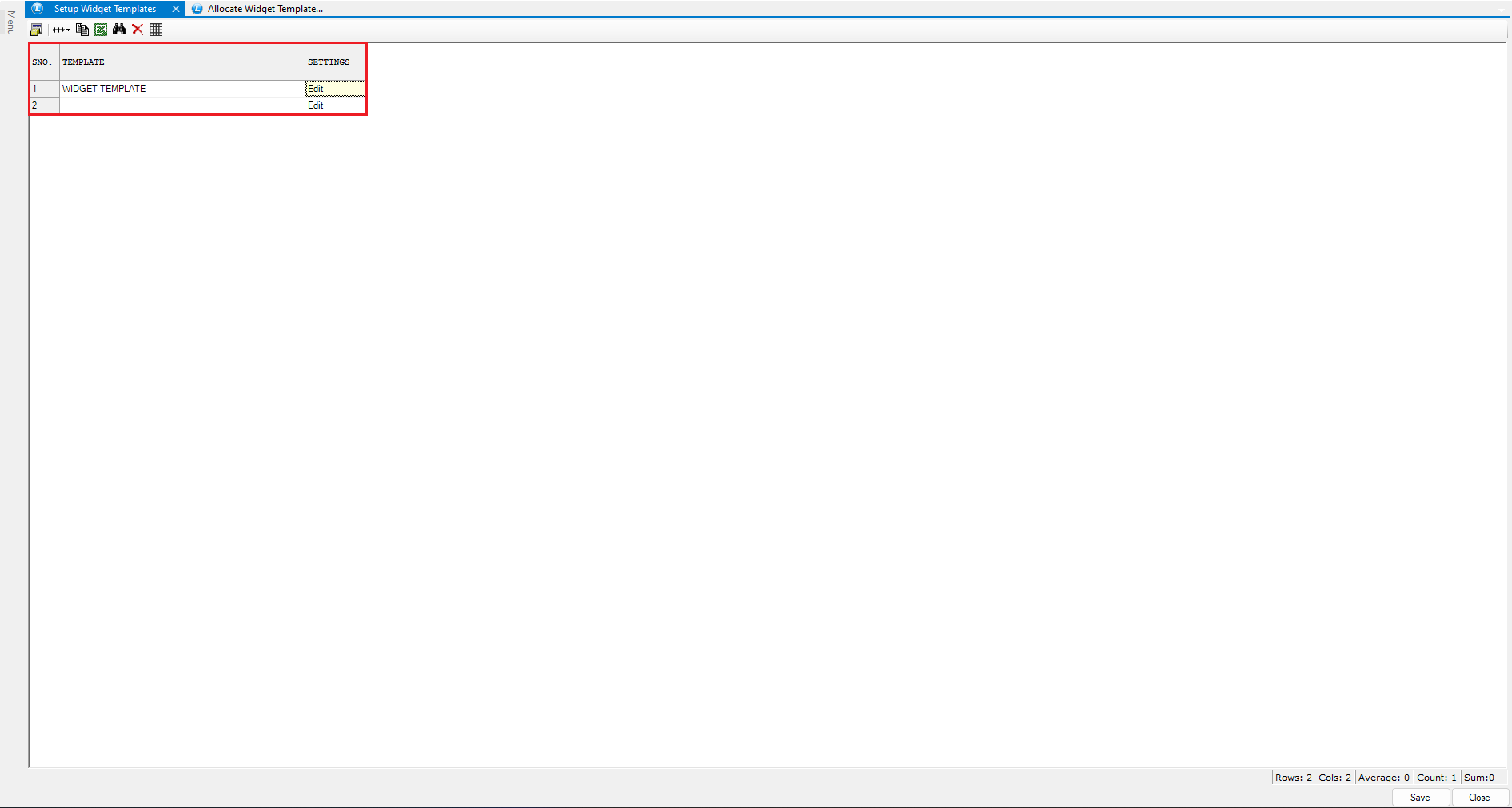
* Return to **Setup Widget Templates**.
* In the **Settings** column, press the **Space Bar** on the **Edit** option for the selected template.
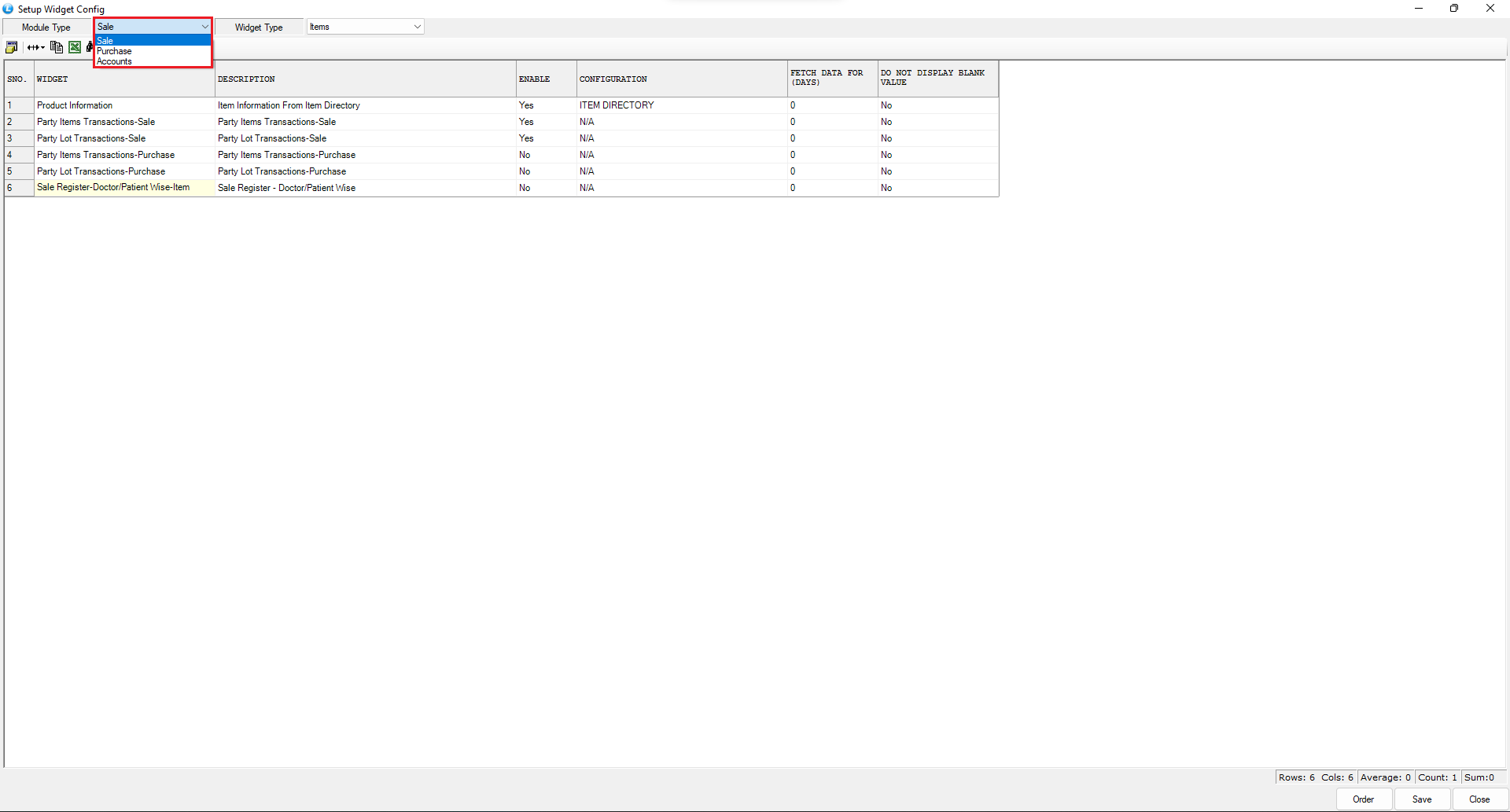
* The **Widget Template Configuration** window will open.
***
### **Select Module Type**
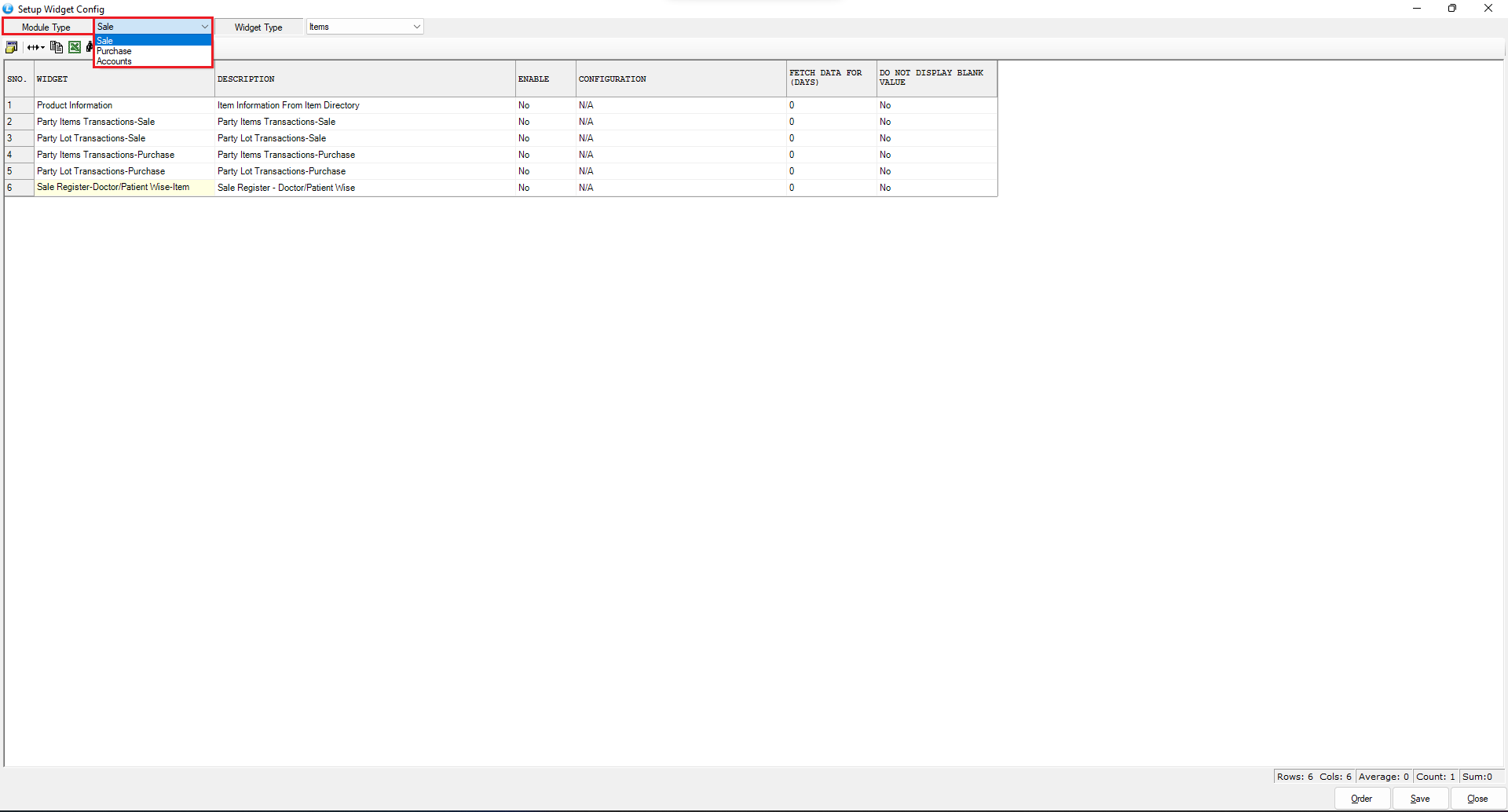
* From the **Module Type** dropdown, choose the required module:
* Sale
* Purchase
* Accounts
* In this example, select **Sale**.
***
### **Select Widget Type**
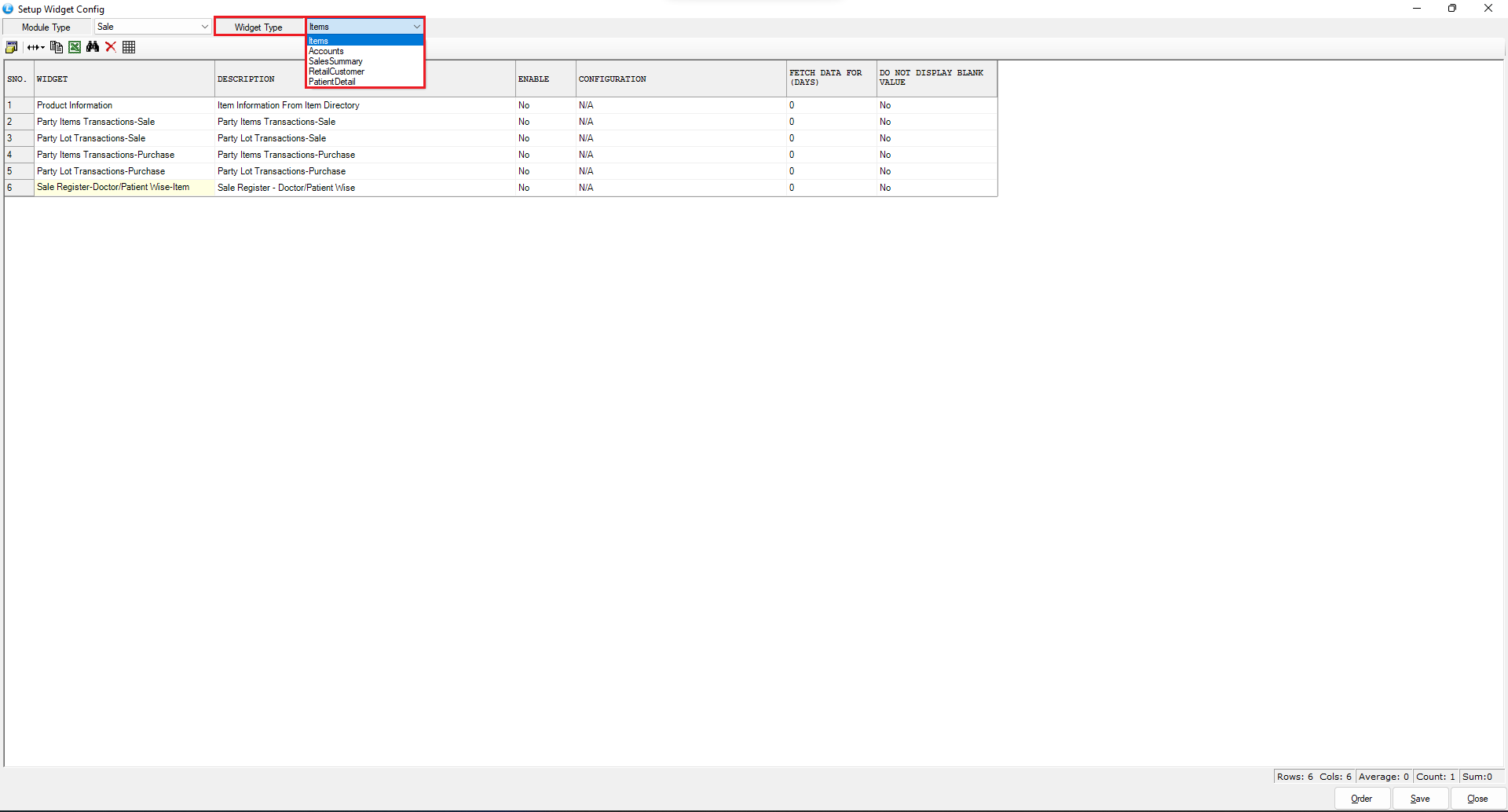
* Open the **Widget Type** dropdown.
* Choose the appropriate widget type as per your requirement.
* Example: Select **Items**.
* Based on the selection, the system will display all available related widgets.
***
### **Enable Required Widgets**
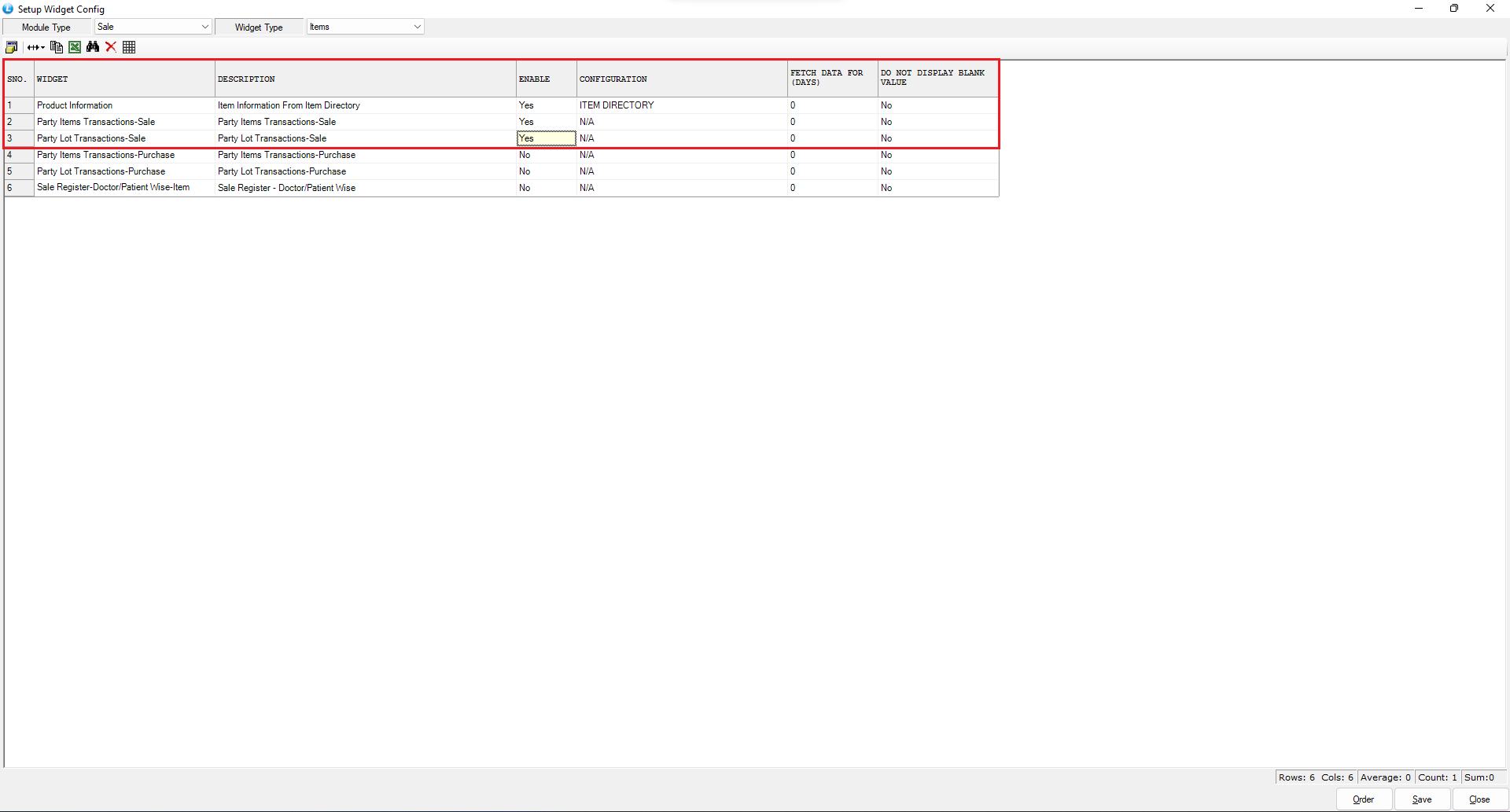
* From the displayed list, enable the required widgets by setting **Enable = Yes**.
* Example widgets enabled:
* Product Information
* Party Items Transactions Sale
* Party Lot Transactions Sale
* Configure additional settings if required.
* Click **Save** to apply the configuration.
***
### **Verify Widget Functionality**
* Log in using the **same user** to whom the widget template was allocated.
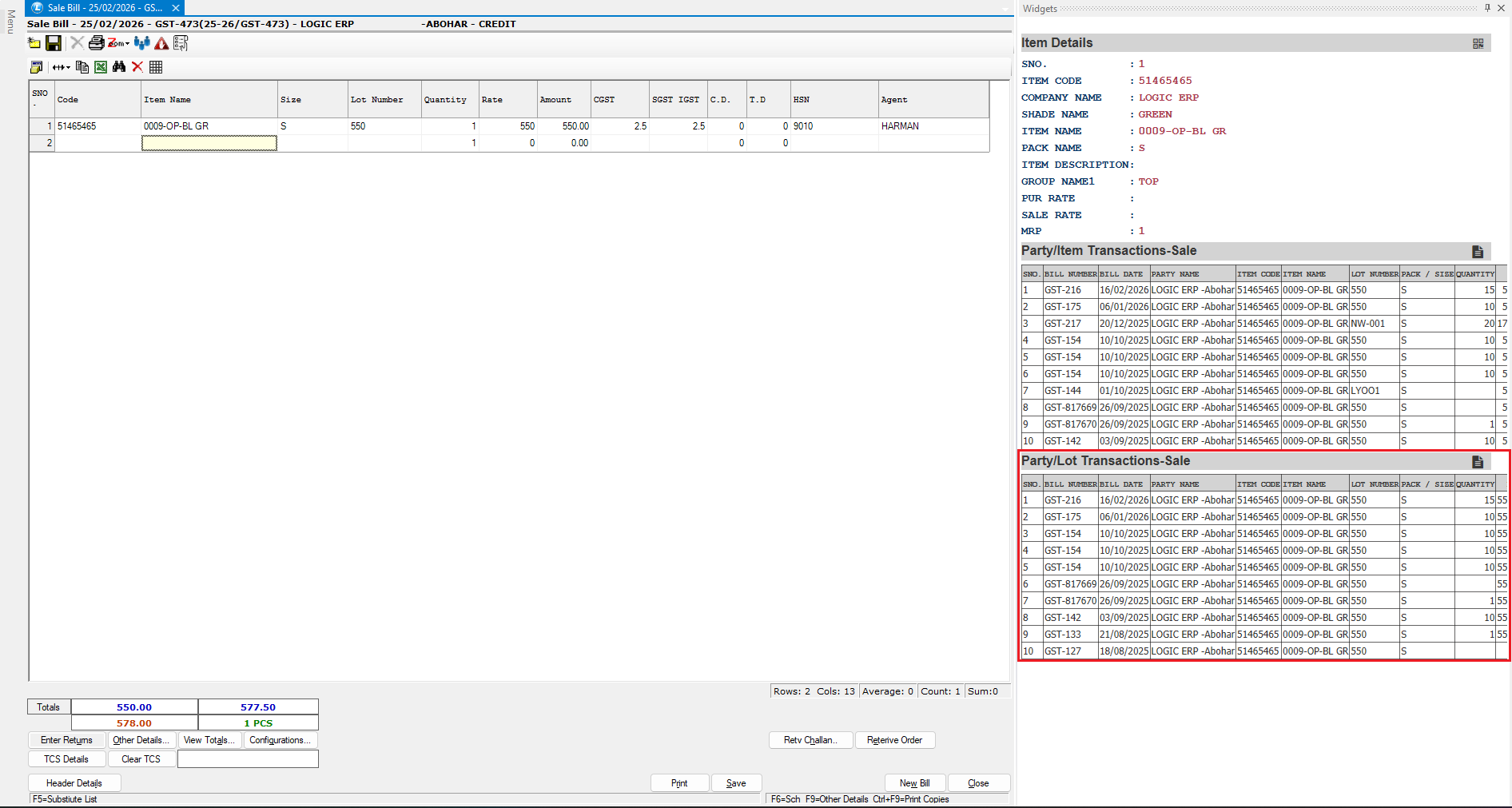
* Open the **Sale Bill Module** and begin billing.
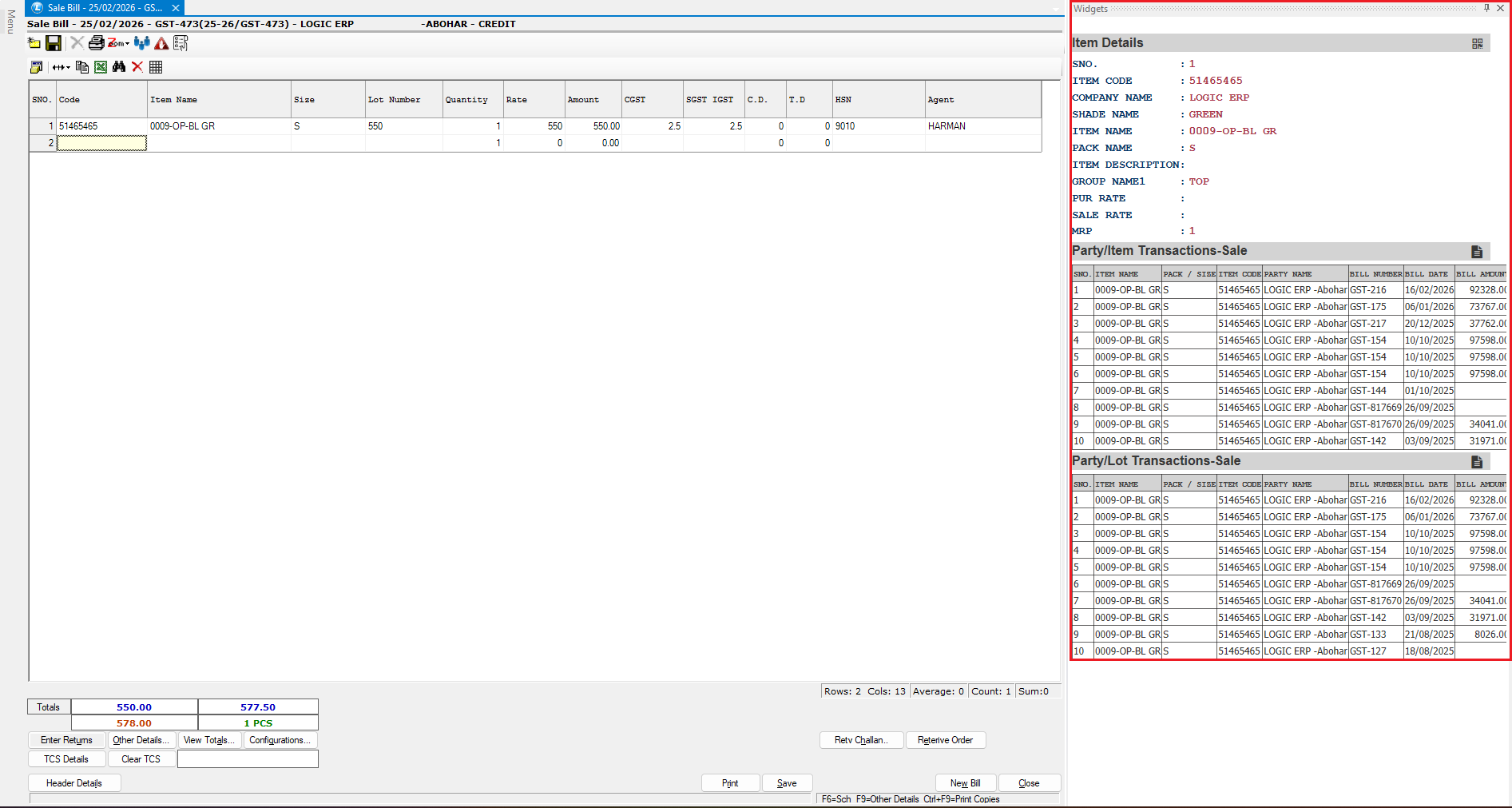
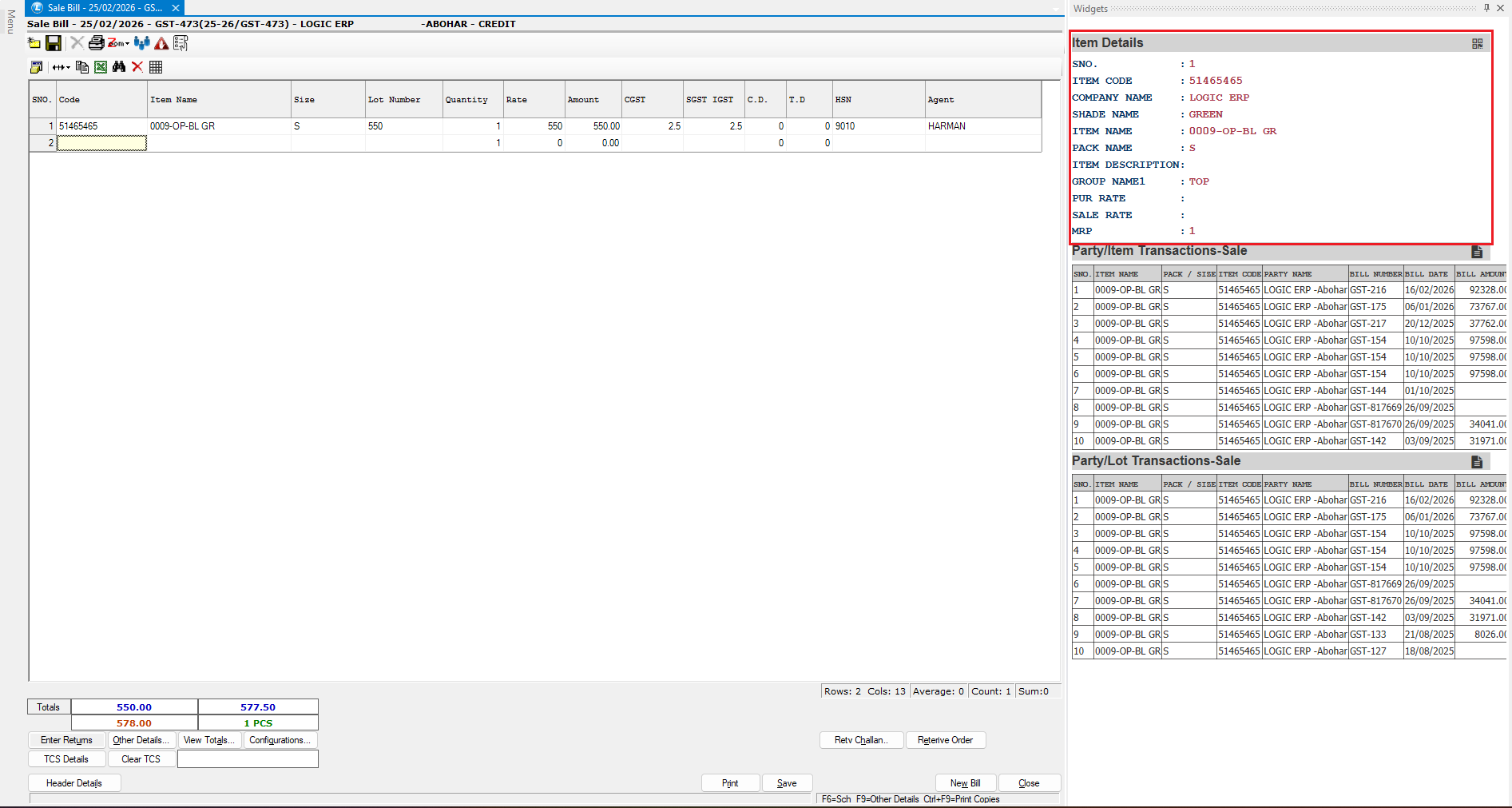
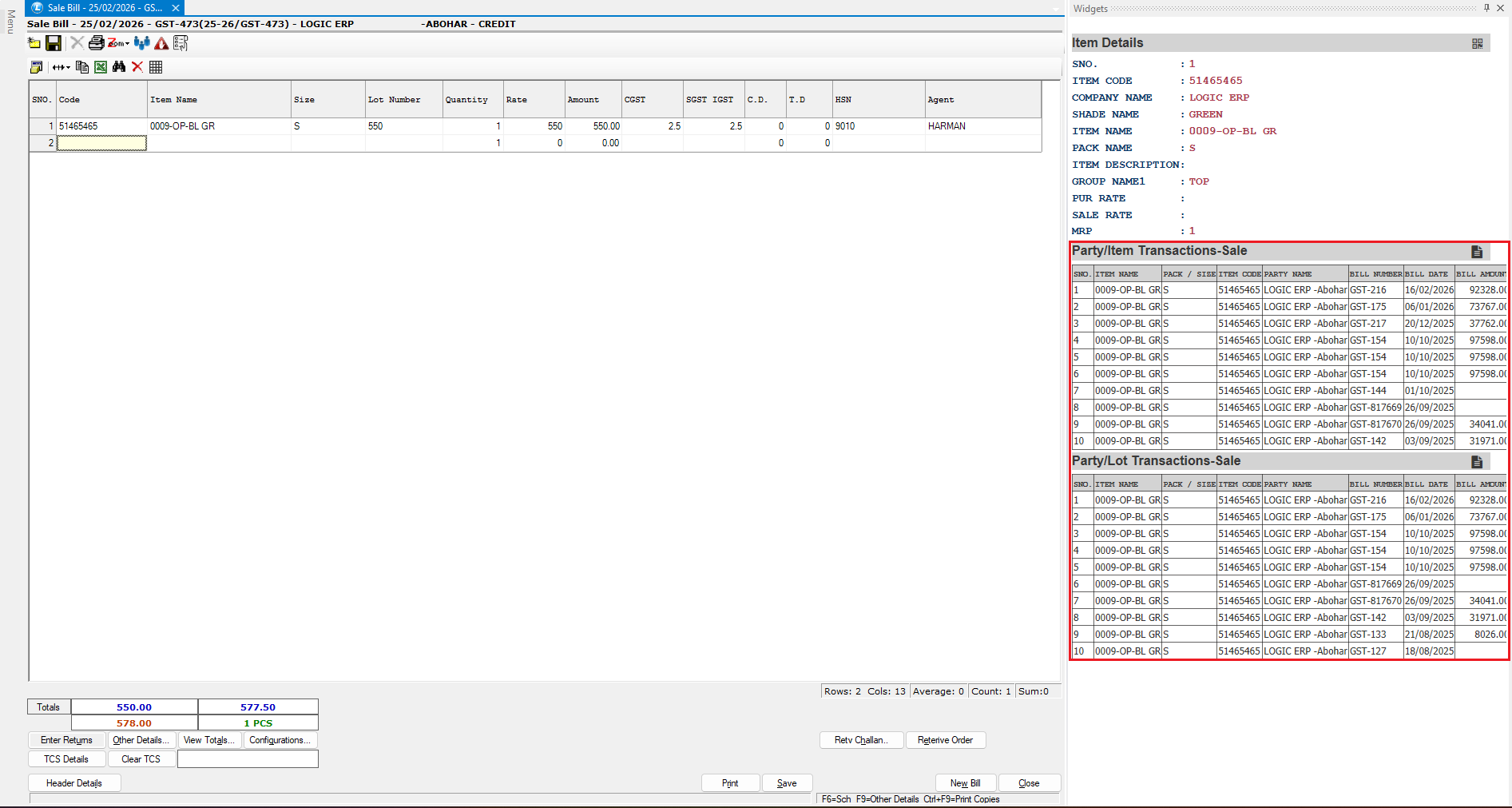
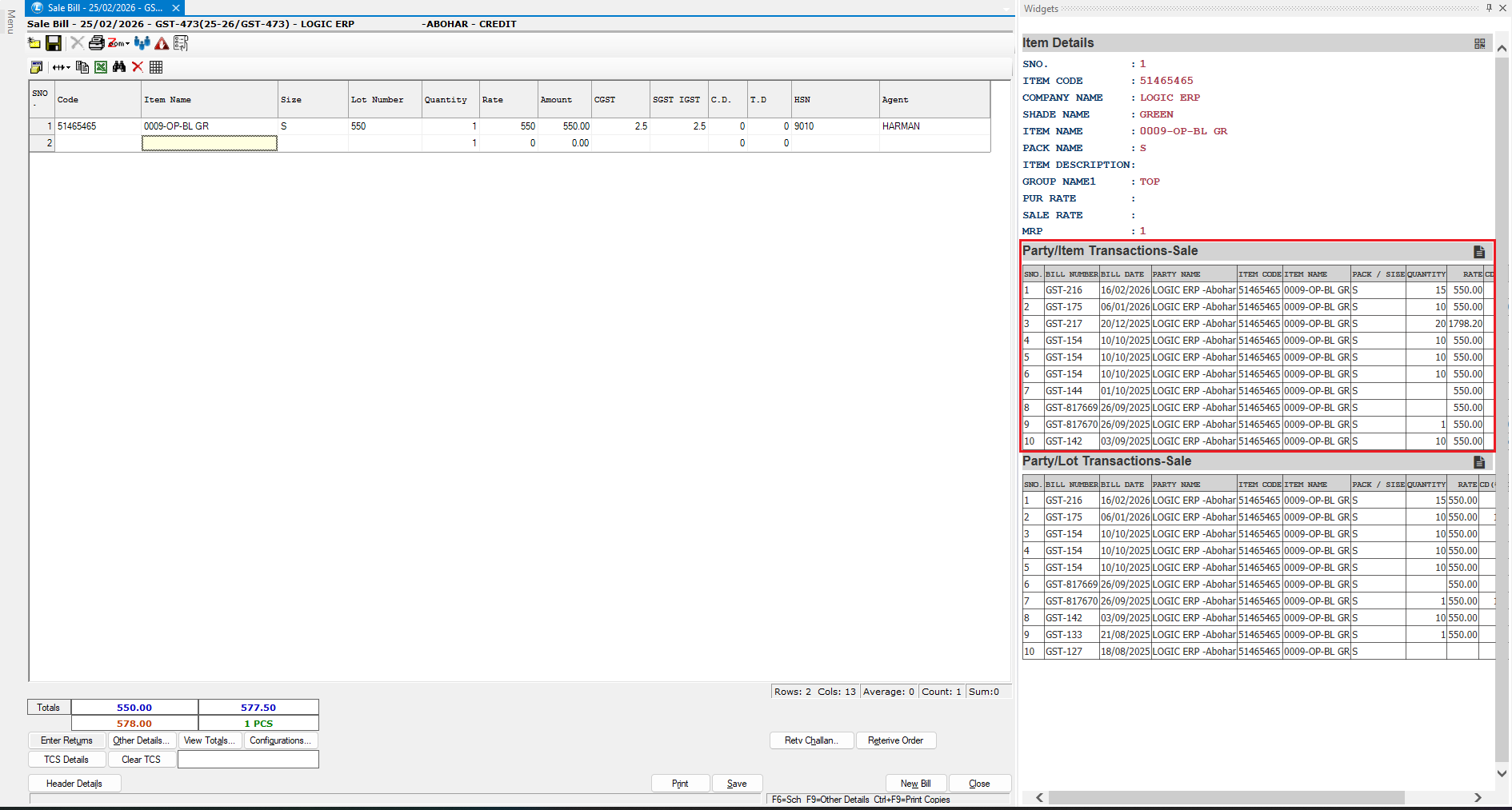
* Upon item selection, the **Widget Panel** will appear on the side of the billing screen.
***
### **Review Widget Display**
* The **Item Details Widget** displays complete information about the selected item.
* The **Party Items Transactions Sale Widget** shows the transaction history of the same item.
* This helps users quickly analyze past sales while billing.
***
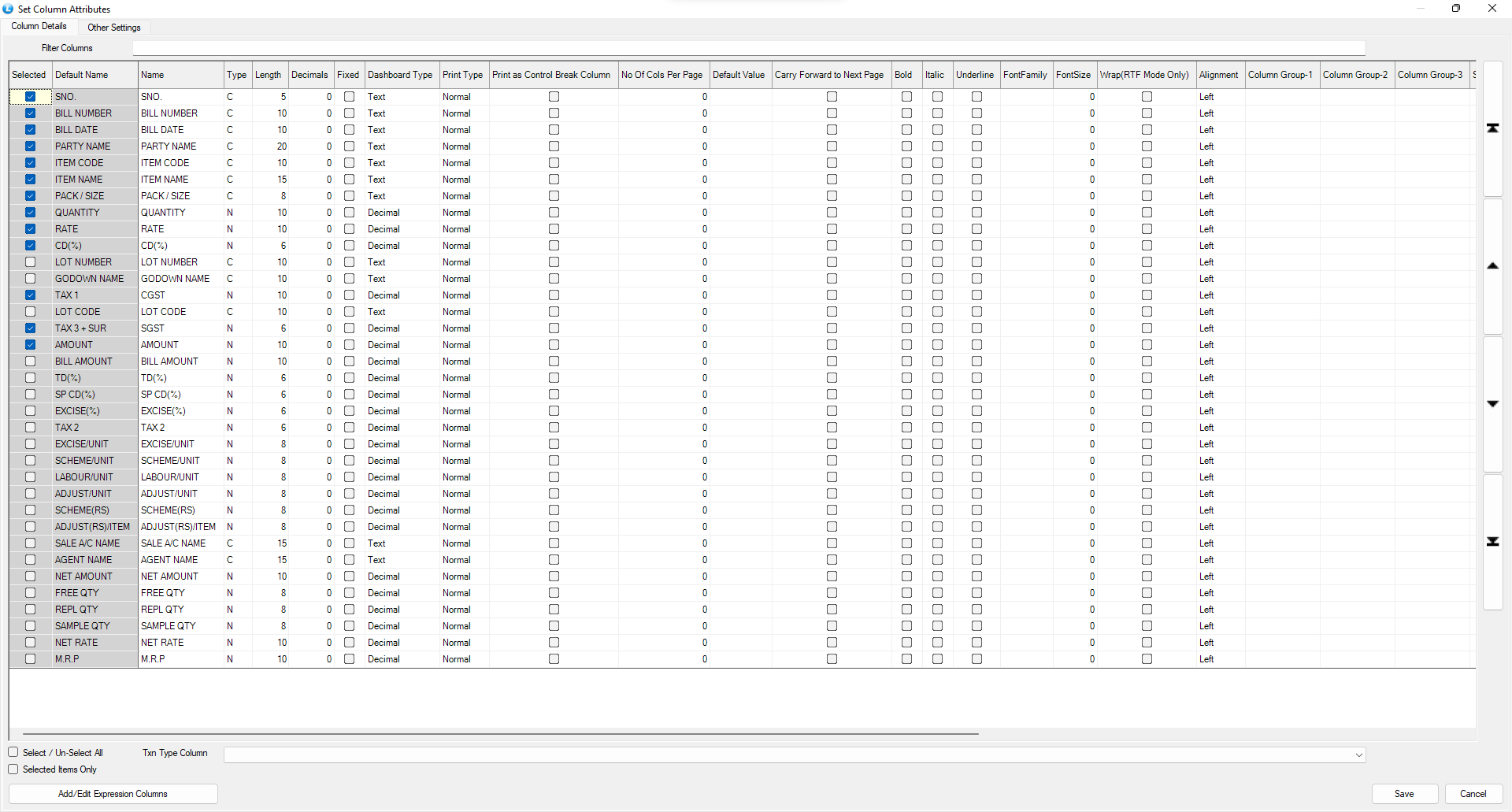
### **Customize Widget Columns (Item Transactions)**
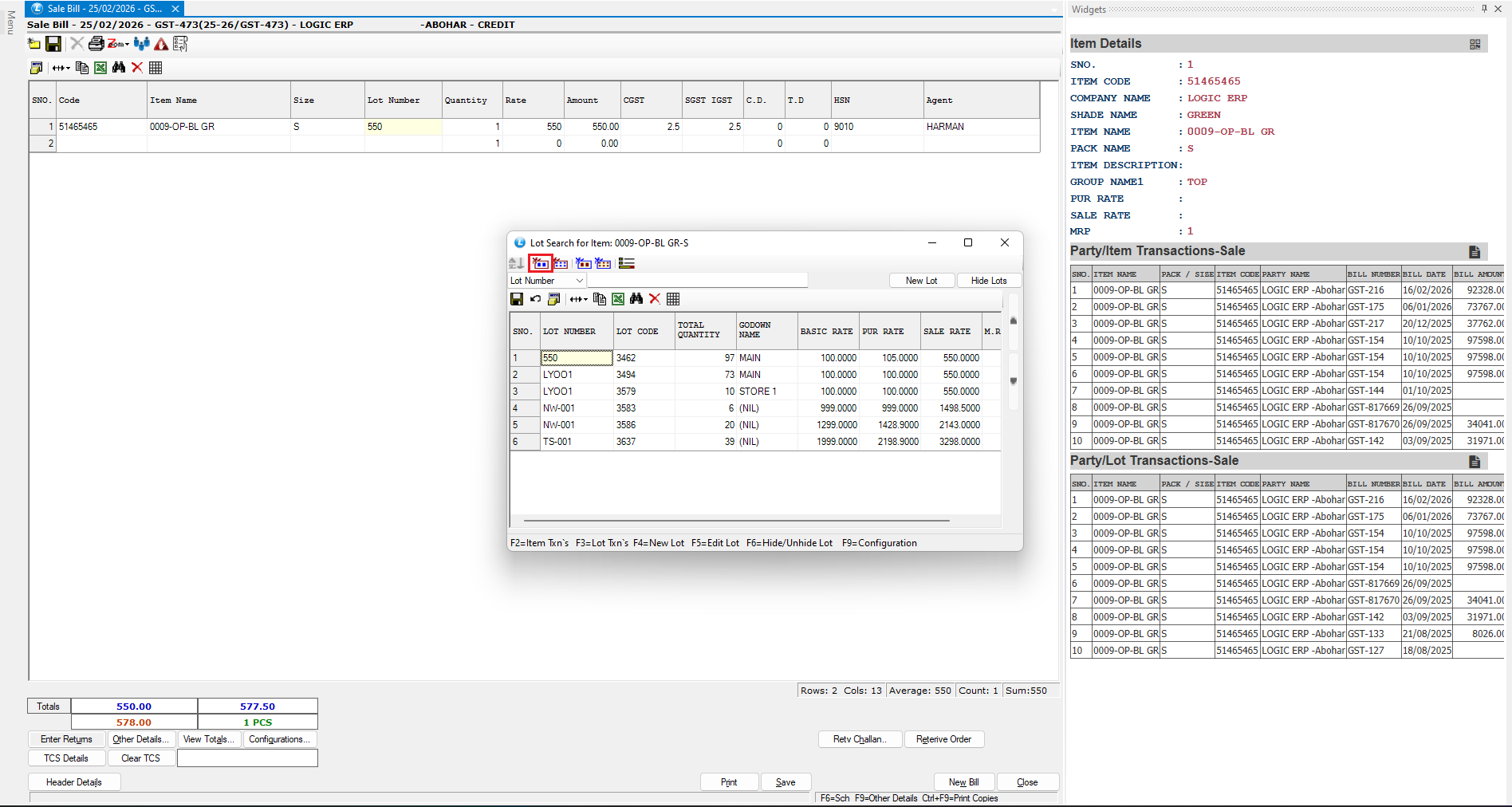
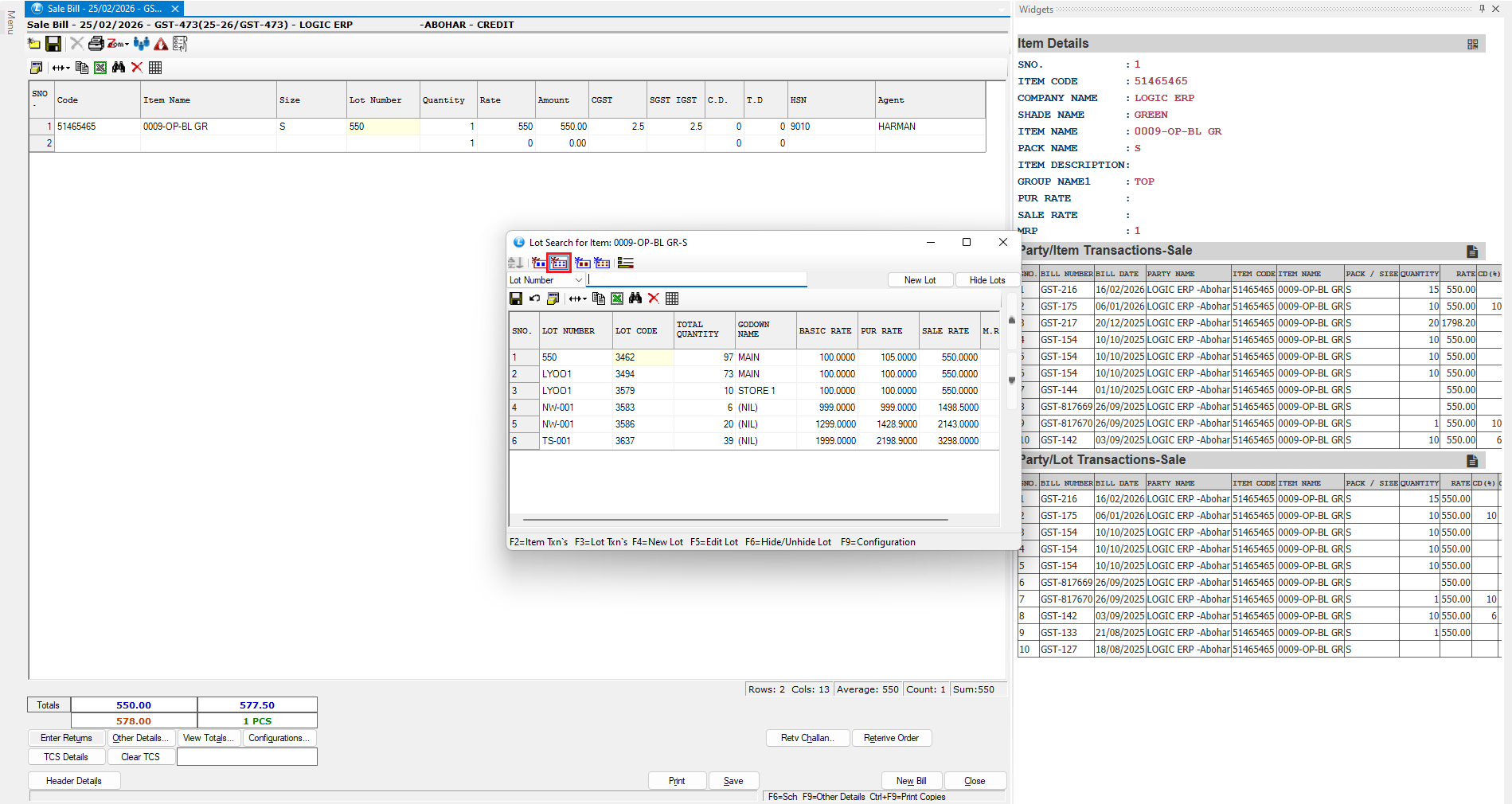
* Press the **Space Bar** on the **Lot Number** column.
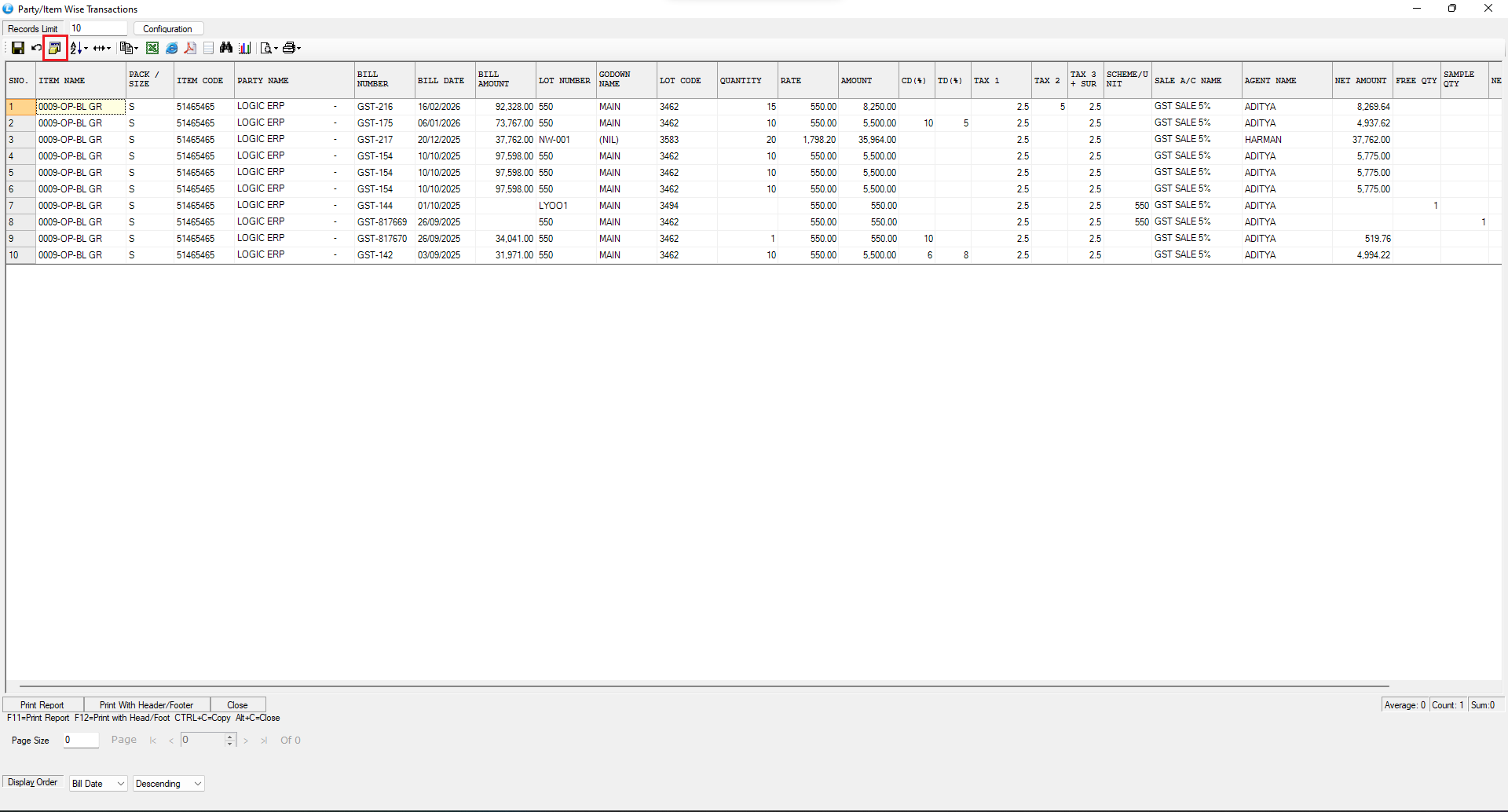
* Click the first icon or Press (F2) key– to Show Sale Item Transactions.
* Go to **Setup Column Attributes**.
* Select only the columns you want to display.
* Save the changes.
* The widget panel will now show a cleaner, customized view.
***
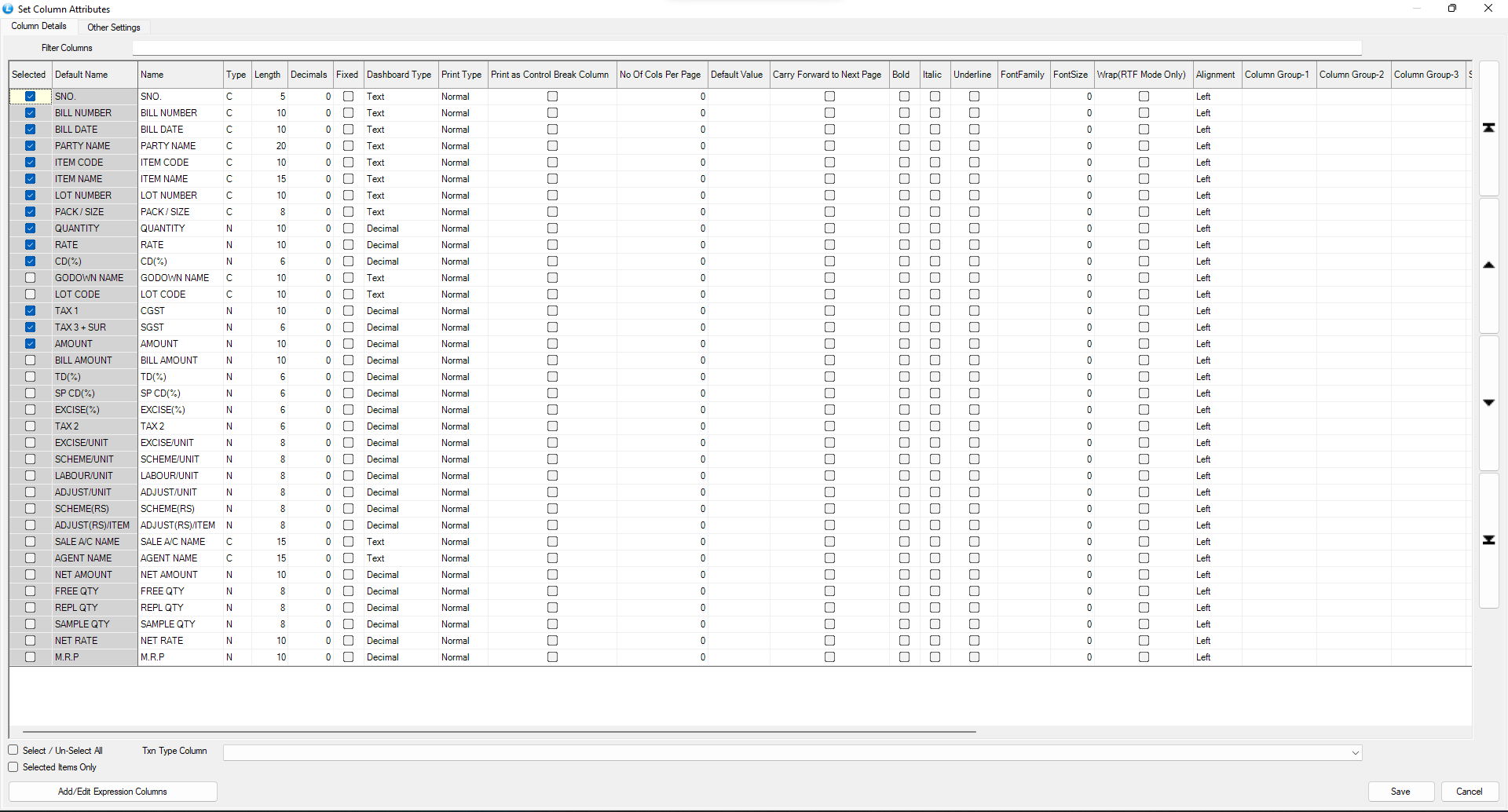
### **Customize Party Lot Transactions Widget**
* Press the **Space Bar** on the **Lot Number** column again.
* Click the second icon or press (F3)– to Show Sale Lot Transactions.
* Open **Setup Column Attributes**.
* Select the required columns and save.
* The **Party Lot Transactions Sale Widget** will update accordingly, showing only the selected fields.
***
### **Additional Configuration**
* Similarly, you can configure **Widget Templates** for:
* **Purchase Module**
* **Accounts Module**
***
### **Conclusion**
Widget Templates in Logic ERP allow you to **personalize the billing screen**, improve visibility of item and transaction data, and enhance user efficiency. With flexible configuration and column-level customization, each user gets a clean and relevant working view.
---
# Agent Instructions
This documentation is published with GitBook. GitBook is the documentation platform designed so that both humans and AI agents can read, navigate, and reason over technical content effectively. Learn more at gitbook.com.
## Querying This Documentation
If you need additional information that is not directly available in this page, you can query the documentation dynamically by asking a question.
Perform an HTTP GET request on the current page URL with the `ask` query parameter, and the optional `goal` query parameter:
```
GET https://kb.logicerp.com/logic-erp-learning-hub-tutorials-and-best-practices/user-access/setup-widget-templates.md?ask=&goal=
```
`ask` is the immediate question: it should be specific, self-contained, and written in natural language.
`goal` is optional and describes the broader end goal you are ultimately trying to accomplish on behalf of the user. GitBook uses it to tailor the answer towards what is most useful for that goal.
The response will contain a direct answer to the question and relevant excerpts and sources from the documentation.
Use this mechanism when the answer is not explicitly present in the current page, you need clarification or additional context, or you want to retrieve related documentation sections.