> For the complete documentation index, see [llms.txt](https://kb.logicerp.com/llms.txt). Markdown versions of documentation pages are available by appending `.md` to page URLs; this page is available as [Markdown](https://kb.logicerp.com/logic-erp-learning-hub-tutorials-and-best-practices/inventory/overwrite-lot-no.s-rates.md).
# Overwrite Lot No.'s/Rates
**YouTube:** [How to Overwrite Lot Numbers / Batch Numbers and Rates?](https://youtu.be/V-Ae0lX7GGE)
## How to Overwrite Lot Numbers / Batch Numbers and Rates?
In this tutorial, we will learn how to **override lot numbers and modify lot-wise item rates in Logic ERP** and how to track rate changes using system reports.
***
### Opening the Overwrite Lot Number / Rate Utility
* Navigate to the **Inventory Module** from the main menu
* Open **Overwrite Lot No.'s/Rates.**
***
### Selecting Item and Lot for Modification
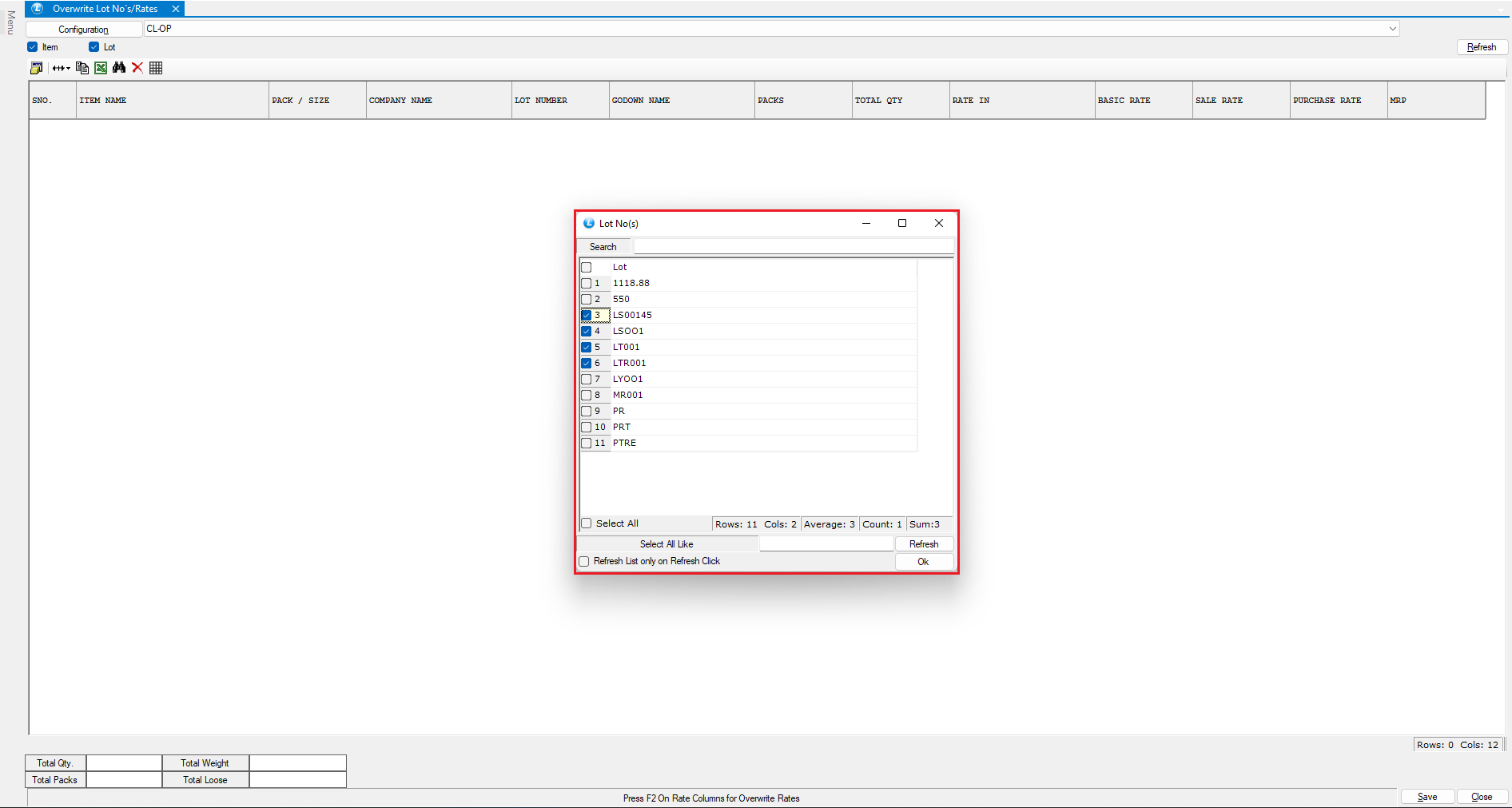
* Select the required **Item Name**
* Choose the corresponding **Lot / Batch Number**
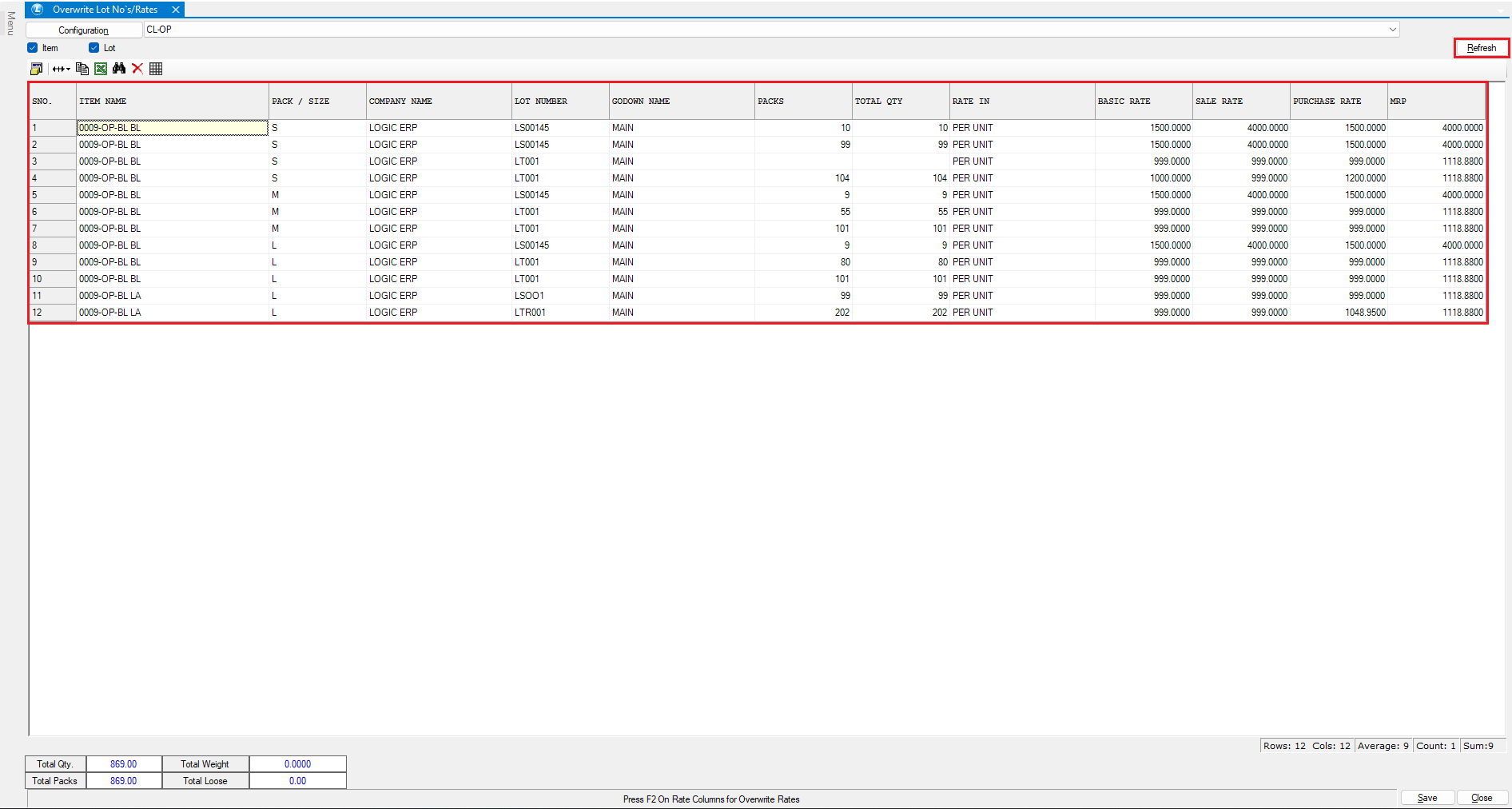
* Click **Refresh** to load the current rate details
***
### Understanding Default Rate Behavior in Sales Billing
Before making any changes, let’s review how rates work by default:
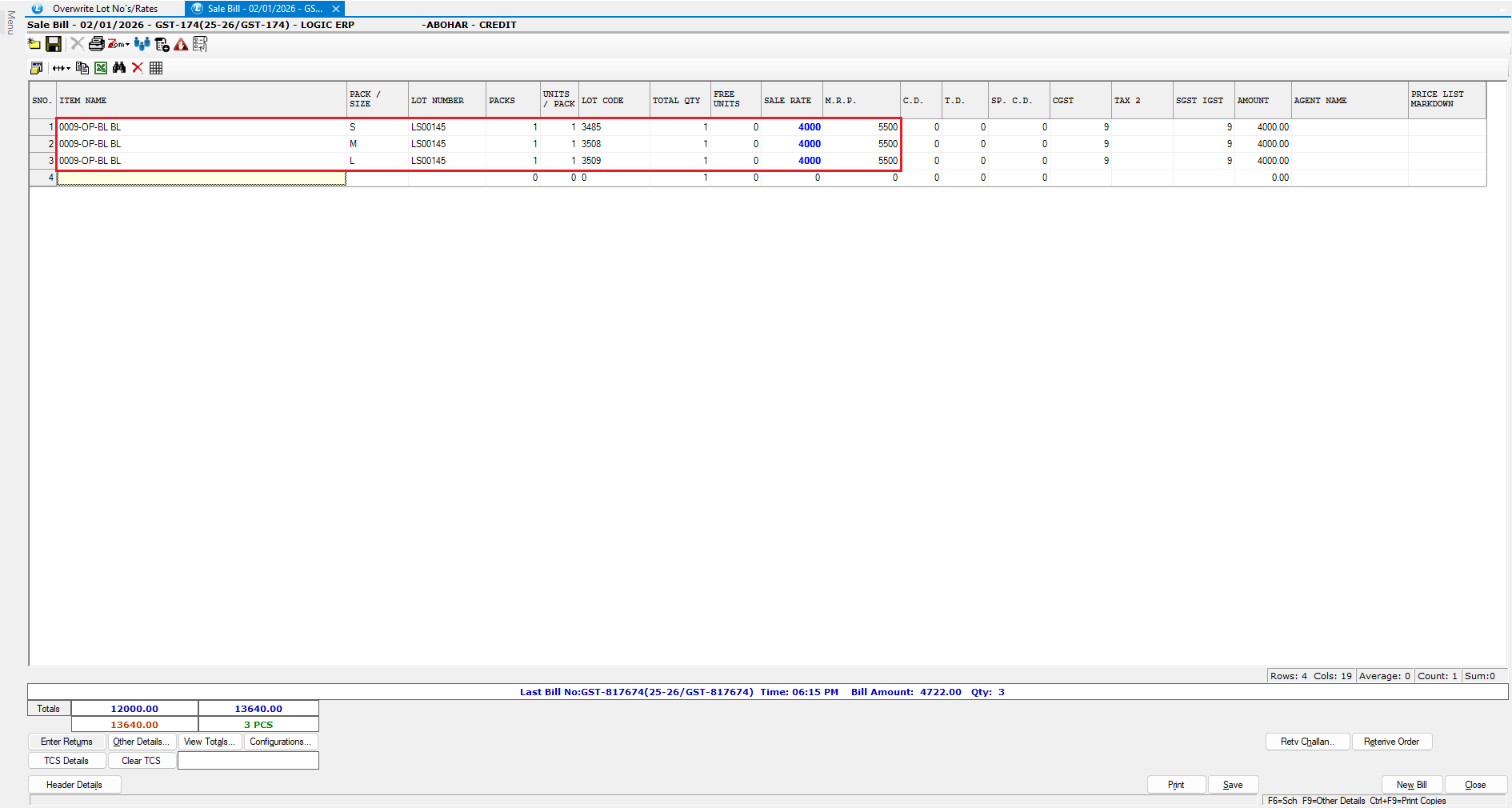
* Open the **Sales Bill** window
* Transact an item normally
* The system applies the **existing lot-wise rate by default**
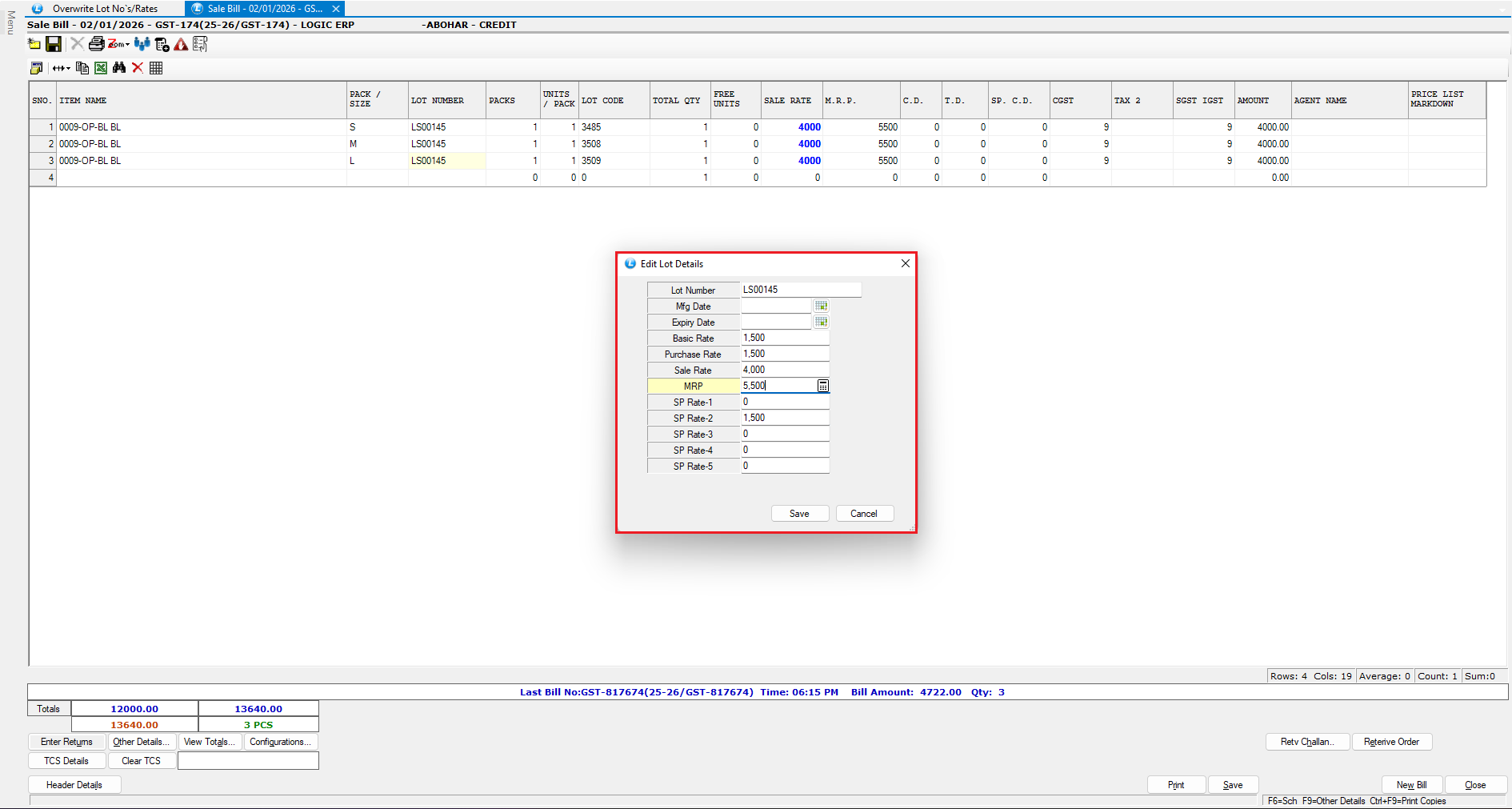
***Note:***\
You can manually edit the rate in the sales bill by pressing **F5** on the **Lot / Batch** column.\
However, editing each lot individually can be time-consuming.
***
### Overwrite Lot Numbers and Rates Using Utility
To simplify bulk rate changes:
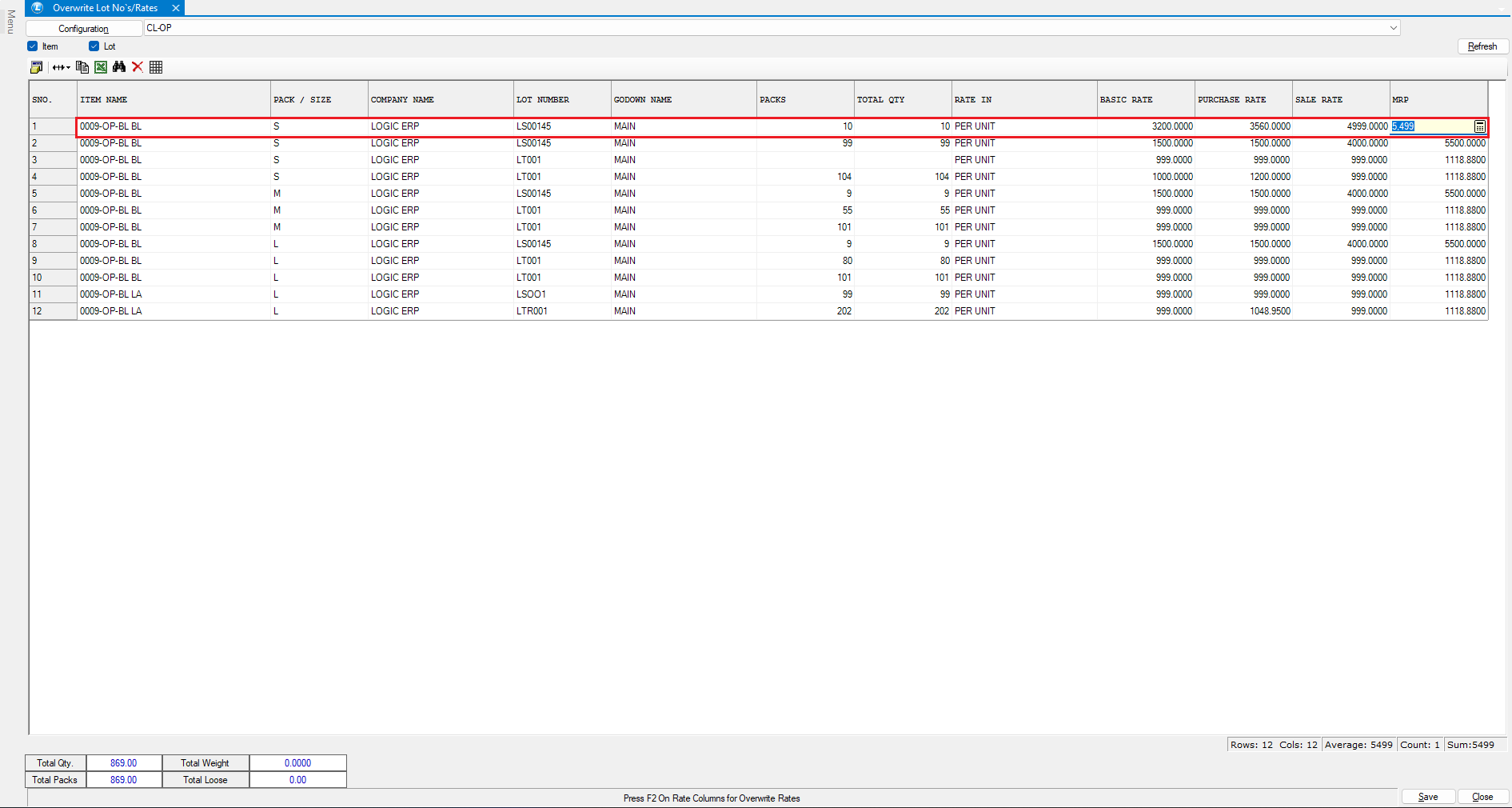
* Navigate to **Overwrite Lot No.'s/Rates**
* Enter the **new rate** against the selected lot
* Modify rates **item by item** as required
The rate defined here will be **automatically picked** in the sales bill whenever that lot is selected.
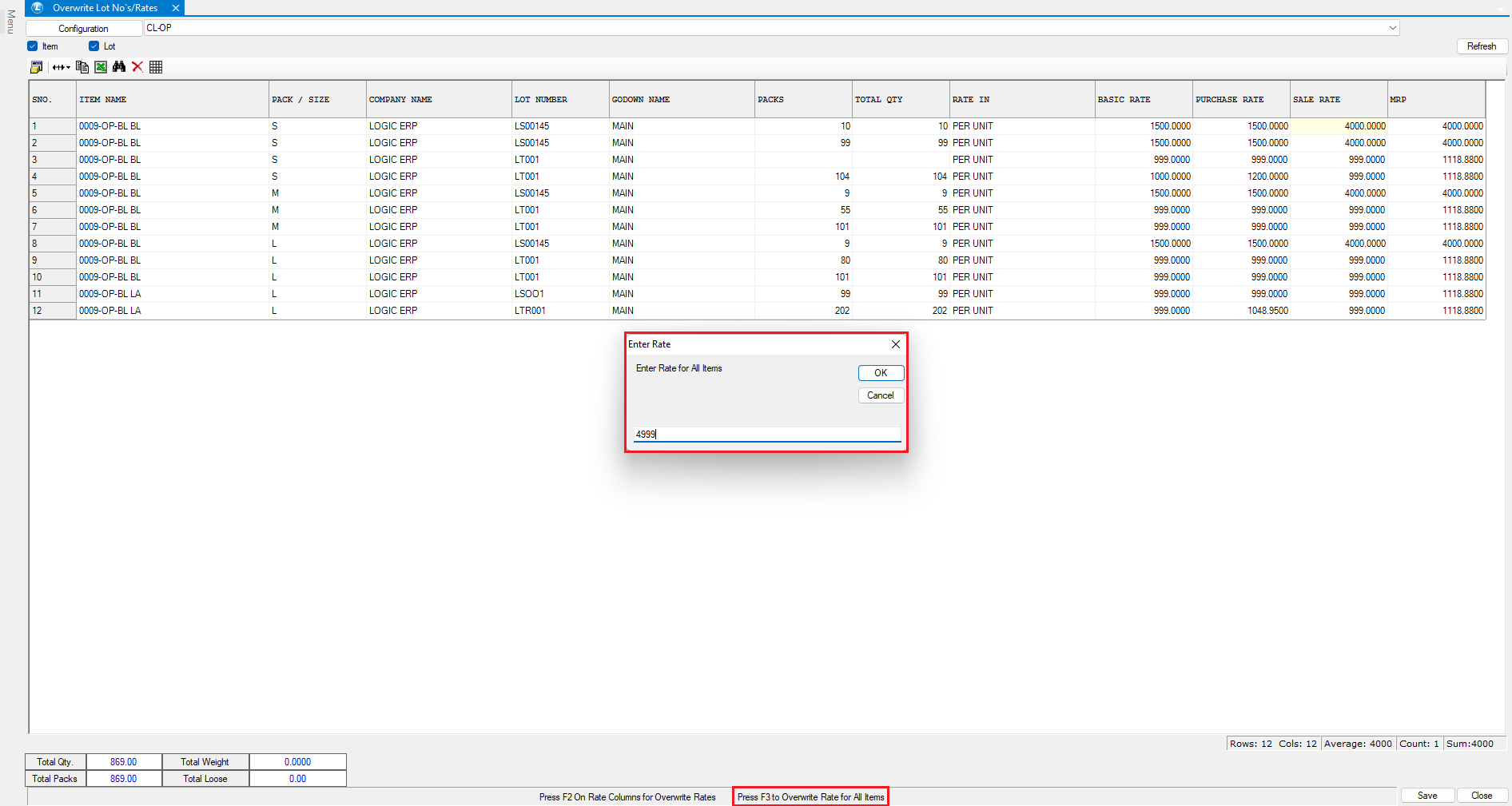
**Overriding Rates for All Items at Once**
* Press **F3** in the rate column
* Enter the new rate
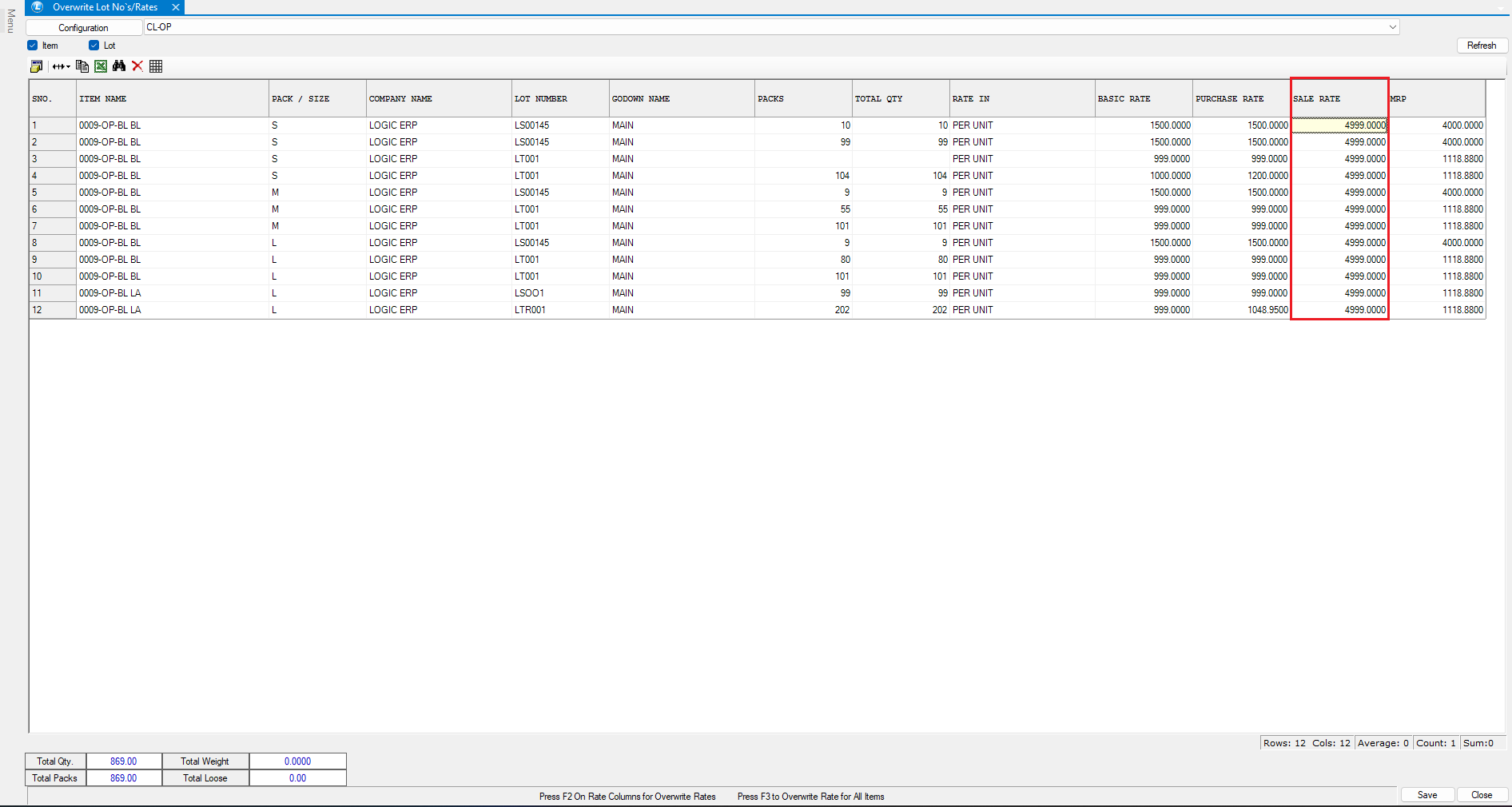
* The system will **overwrite rates for all listed items**
* Click **Save** to apply the changes
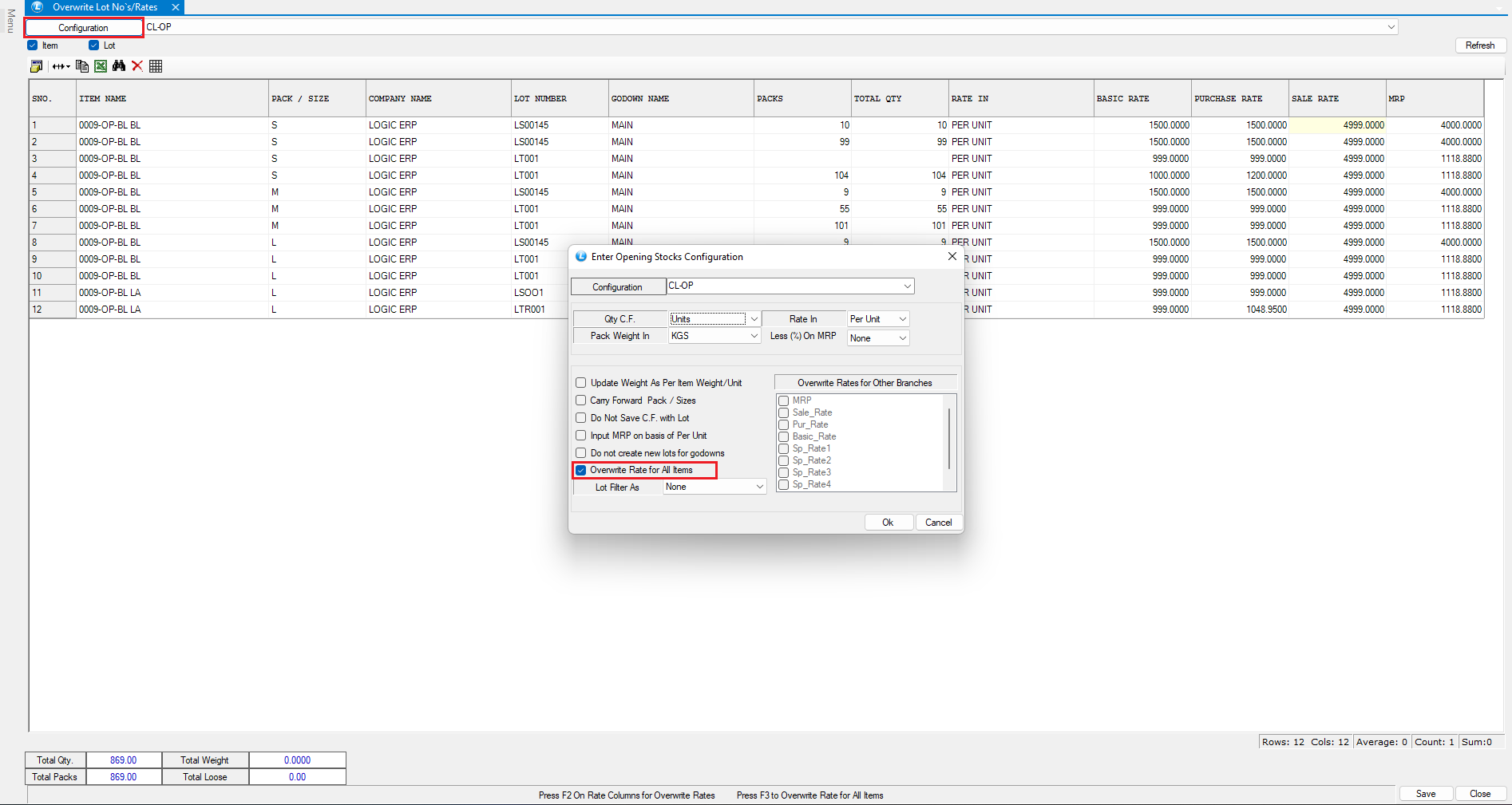
**Note:** If the F3 shortcut is not working, enable the “Overwrite Rate for All Items” option from the Configuration menu at the top.
***
### Verifying Updated Rates in Sales Bill
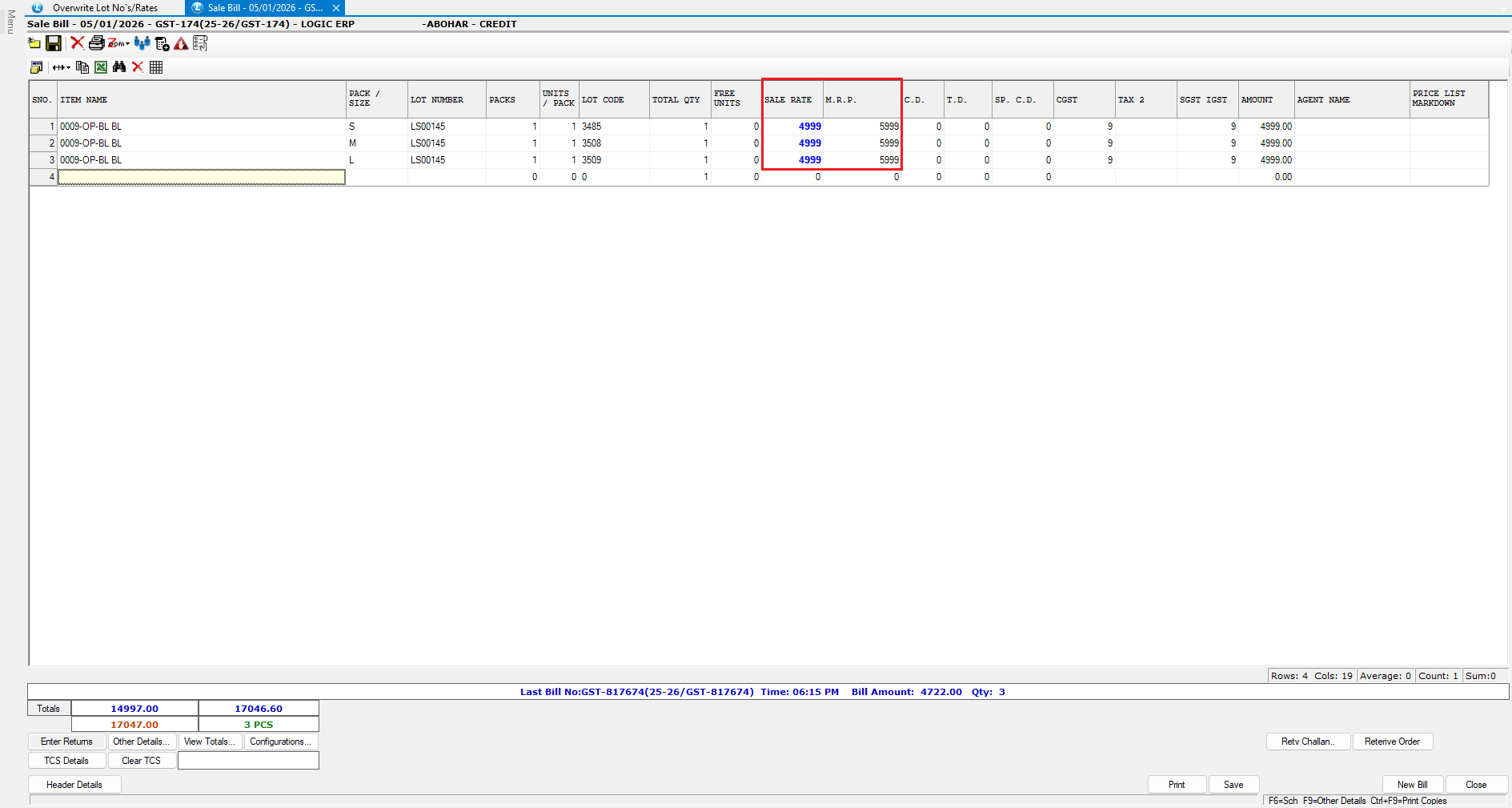
* Return to the **Sales Bill** window
* Create a **New Transaction**
* Select the item and lot
***Result:***\
The **updated batch number and overridden rate** are automatically applied.
***
### Tracking Lot Rate Change History
To review both old and new rate values:
* Go to the **Menu Bar**
* Navigate to **Reports/Queries**
* Click on **Item Reports**
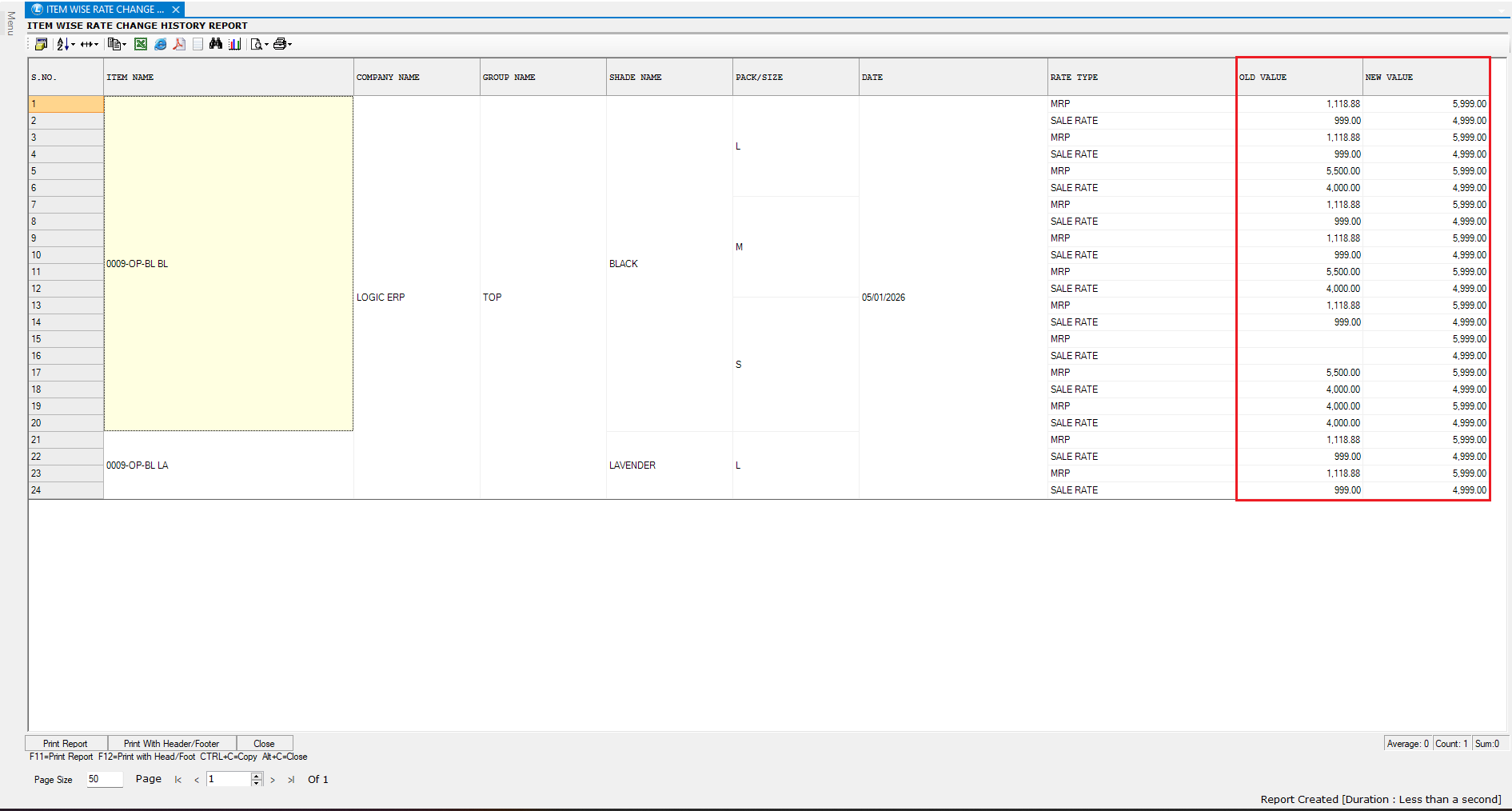
* Open **Item Wise Rate Change History Report**
* Select the required **Item(s)**
* Generate the report
**The report clearly displays:**
* Old Sale Rate
* New Sale Rate
* Old MRP
* Updated MRP
***
### Conclusion
This completes the **Override Lot Number and Rate process in Logic ERP**, enabling quick and efficient lot-wise rate management along with complete rate change traceability.
---
# Agent Instructions
This documentation is published with GitBook. GitBook is the documentation platform designed so that both humans and AI agents can read, navigate, and reason over technical content effectively. Learn more at gitbook.com.
## Querying This Documentation
If you need additional information that is not directly available in this page, you can query the documentation dynamically by asking a question.
Perform an HTTP GET request on the current page URL with the `ask` query parameter, and the optional `goal` query parameter:
```
GET https://kb.logicerp.com/logic-erp-learning-hub-tutorials-and-best-practices/inventory/overwrite-lot-no.s-rates.md?ask=&goal=
```
`ask` is the immediate question: it should be specific, self-contained, and written in natural language.
`goal` is optional and describes the broader end goal you are ultimately trying to accomplish on behalf of the user. GitBook uses it to tailor the answer towards what is most useful for that goal.
The response will contain a direct answer to the question and relevant excerpts and sources from the documentation.
Use this mechanism when the answer is not explicitly present in the current page, you need clarification or additional context, or you want to retrieve related documentation sections.